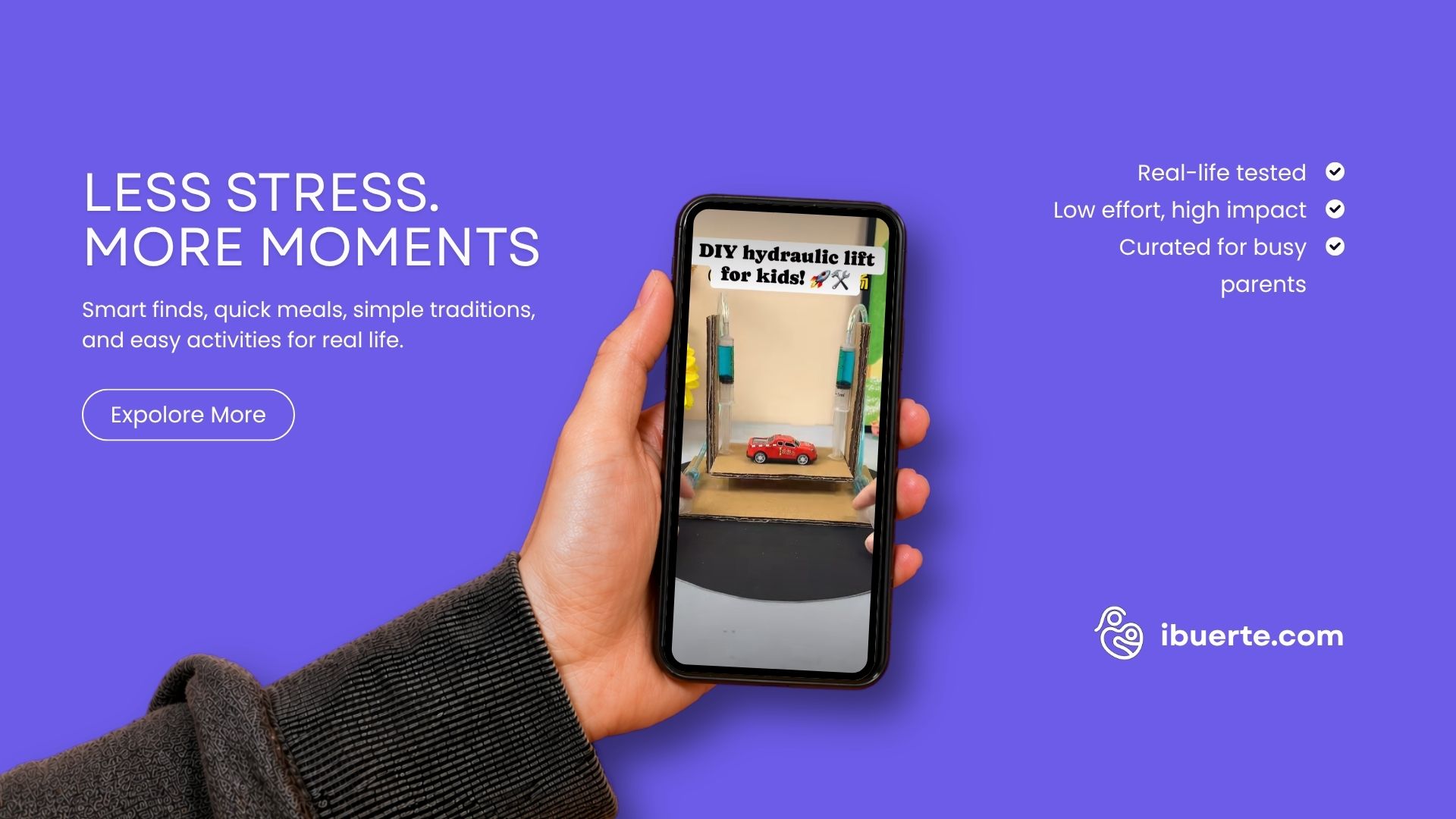

I’ve been looking for a STEM activity that actually keeps my kids attention for more than five minutes. Most experiments either require materials I don’t have, or they fall apart the moment my four-year-old looks at them sideways. Then I saw this hydraulic lift project, and it looked simple enough to actually work.
This build uses cardboard and syringes to recreate how real construction machines lift heavy objects. No fancy tools, no complicated steps. Just materials you probably already have at home, and a result that genuinely impresses kids.
📱 Source: @mollyteacher on Instagram
What Makes This Project Worth Doing
The hydraulic lift works because of a basic physics principle. When you push the plunger on one syringe, the pressure travels through the water inside the tubing and pushes the plunger on the second syringe. Because the second syringe is larger, the force multiplies. Small effort, big result.
Kids see this happen in real time, which makes the abstract concept of force and pressure click in a way a textbook never could.
The finished hydraulic lift using cardboard, two syringes, and tubing. The platform lifts with just light pressure on the plunger.
What You Need
- Cardboard (a cereal box works)
- Two syringes (different sizes)
- Clear plastic tubing (small diameter)
- Water
- Glue or tape
- Scissors
Setup time is under 15 minutes. Mess level is minimal, mostly just water on the table.
How It Works and Why It Matters
Push the smaller syringe plunger, and the larger one moves up, lifting whatever sits on the platform. This is the exact same principle used in diggers, forklifts, and car jacks. Real engineering, simplified for small hands.
For younger kids, focus on the cause and effect: push here, platform goes up. For older kids, introduce the language: force, pressure, hydraulic system.
How to Build It Simply
- Cut two cardboard platforms, one slightly smaller than the other.
- Attach the larger syringe to the base of the structure.
- Connect the two syringes with the tubing.
- Fill the system with water, making sure there are no air bubbles.
- Seal all connections to prevent leaks.
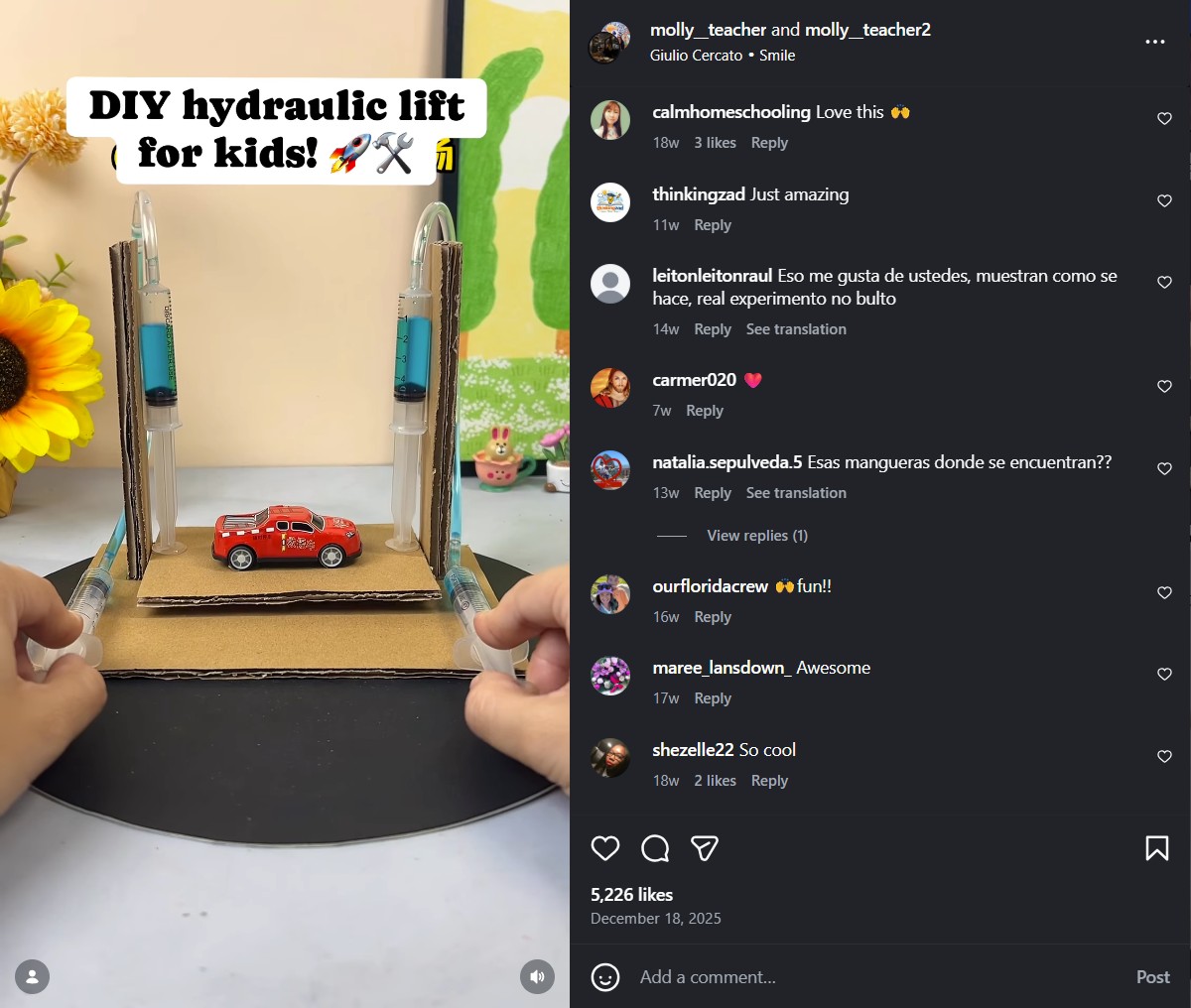 The project in action on Instagram, showing how the platform lifts as the syringe plunger is pushed.

The Bottom Line
This is the kind of project that earns bonus points with your kids. It actually works, it teaches real engineering, and it keeps them engaged long enough for you to finish your coffee. Keep the materials in a drawer and you have a ready-to-go STEM activity any time you need one.
Linea
Professional mom of three and somehow still standing. Low-prep activities, cozy traditions, kid-friendly recipes & finds for curious kids, because we're all winging it together :)
Learn more about us →