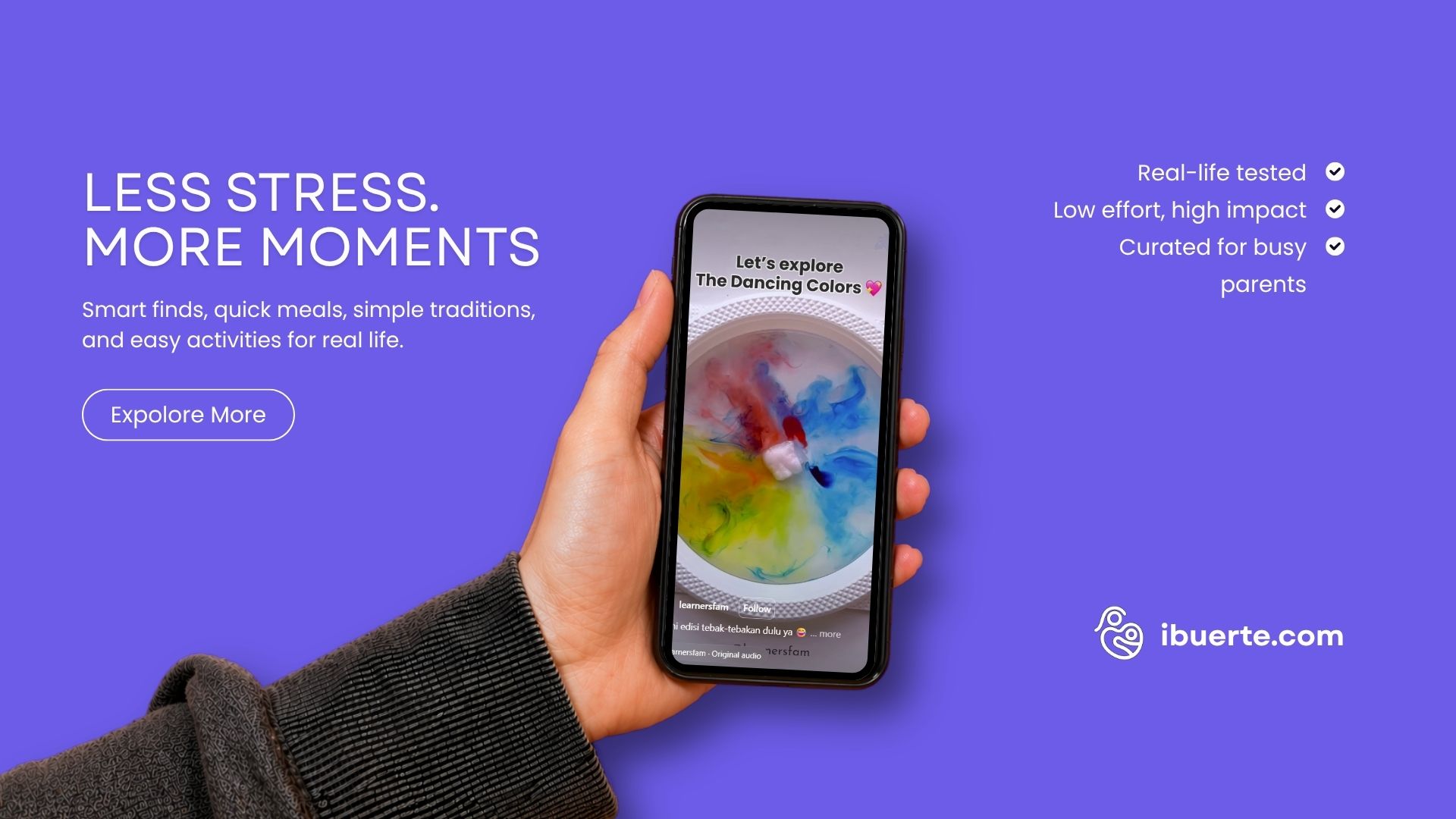

Sometimes the best learning happens when kids don’t know they’re learning. This mystery science challenge is designed exactly for that — a visual “what’s happening here?” moment that pulls kids in before you even explain the science.
Let’s see if your little ones can figure it out.
The Mystery
You set up a simple experiment with everyday materials. Nothing unusual about it — just a plate, some water, and one secret ingredient (hint: not soap!).
Then something surprising happens. The liquid starts moving on its own. Patterns form. Something is clearly at work — but what?
Your mission: give kids the clues, let them hypothesize, and build the excitement before revealing the answer.
What You Need
- A shallow plate or dish
- Water (enough to cover the bottom of the plate)
- Ground black pepper (the main visual clue)
- One drop of dish soap (the secret that makes everything work — but don’t tell them that yet!)
- A cotton swab (to add the soap without disturbing the water too much)
How to Set It Up
Step 1 — Pour water into the plate
Fill the plate with enough water to create a smooth surface. This is your base.
Step 2 — Add the pepper
Sprinkle ground black pepper evenly across the surface of the water. It should sit on top, creating a dark layer that will make the movement visible.
Step 3 — Ask the big question
Before you do anything else, ask: “What do you think will happen if I touch this water with something?”
Let them guess. Let them hypothesize. This is where the learning lives.
Step 4 — The reveal
Touch a cotton swab to the center of the water — but first, dip the cotton swab in dish soap.
Watch the pepper scatter. The soap creates a dramatic, fast-moving reaction that radiates outward from the center.
Step 5 — The moment of truth
Now it’s time to explain why. The answer is the Marangoni effect.
Before the reveal — what will happen when soap touches the water?
What Is the Marangoni Effect?
Here’s the science in plain terms:
Surface tension is the “skin” that holds the top of water together. It’s why water beads up instead of spreading flat.
When soap is added to water, it dramatically reduces the surface tension in that spot. The surrounding water — still with higher surface tension — pulls hard on the surface around it, creating a flow away from the soap.
This flow carries the pepper with it, scattering it to the edges in a dramatic radial pattern.
In other words: Soap spreads, and it drags everything on the surface along with it.
The same effect is what makes:
- Tears of wine — the pattern that forms in a glass of wine as alcohol evaporates
- Dust clearing on water — how pollutants spread and disperse on a water surface
- Welding — the Marangoni effect influences how weld pools flow during metal welding
Why This Works as a Learning Experience
This challenge isn’t just about watching something cool. It teaches:
- Observation — what do you actually see happening?
- Hypothesis — what do you think is causing it?
- Cause and effect — the soap creates a chemical change in the water
- Real-world application — the same principle appears in engineering and nature
- Scientific patience — the answer doesn’t come until the very end
The mystery format also builds engagement. Kids are watching carefully, thinking hard, and genuinely invested in finding out what makes it work.
The Variation — Try Without Telling Them
For older kids or a bigger challenge:
- Set up two plates — one with plain water, one with soap already mixed in
- Add pepper to both
- Ask them: “Why did the pepper move on one plate but not the other?”
- The answer gets them thinking about the difference between having soap in the water vs. adding it to the surface
This level-ups the challenge by making the contrast visual and immediate.
Follow-Up Questions to Ask
- “What if we used cooking oil instead of water — would the effect be the same?”
- “Why does soap reduce surface tension?”
- “Where else do you think this might happen in real life?”
- “Could we use something other than pepper to make it visible?”
These questions turn a 5-minute experiment into a 30-minute science conversation.
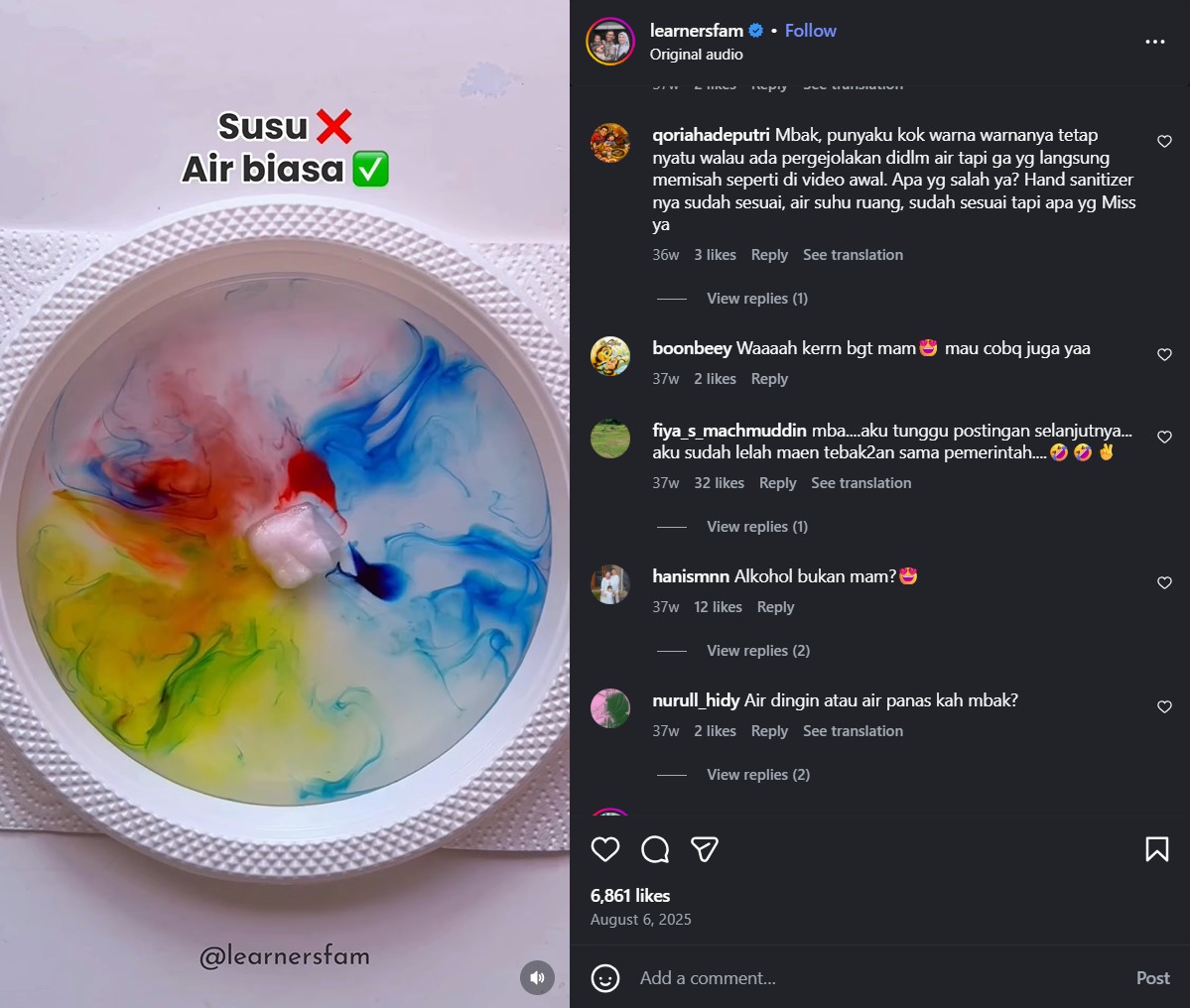 The reveal — the Marangoni effect in action
The Takeaway
Science isn’t always about knowing the answer in advance. Sometimes it’s about:
- Observing something unexpected
- Asking “why did that happen?”
- Building a hypothesis
- Testing your thinking
This mystery challenge gives kids all of that — wrapped in a visual moment that makes them go “whoa!”
Give it a try and see how close they get to guessing the Marangoni effect.
Credit: @learnersfam — shared via Instagram Reel.
Watch the full mystery challenge on Instagram.
Linea
Professional mom of three and somehow still standing. Low-prep activities, cozy traditions, kid-friendly recipes & finds for curious kids, because we're all winging it together :)
Learn more about us →