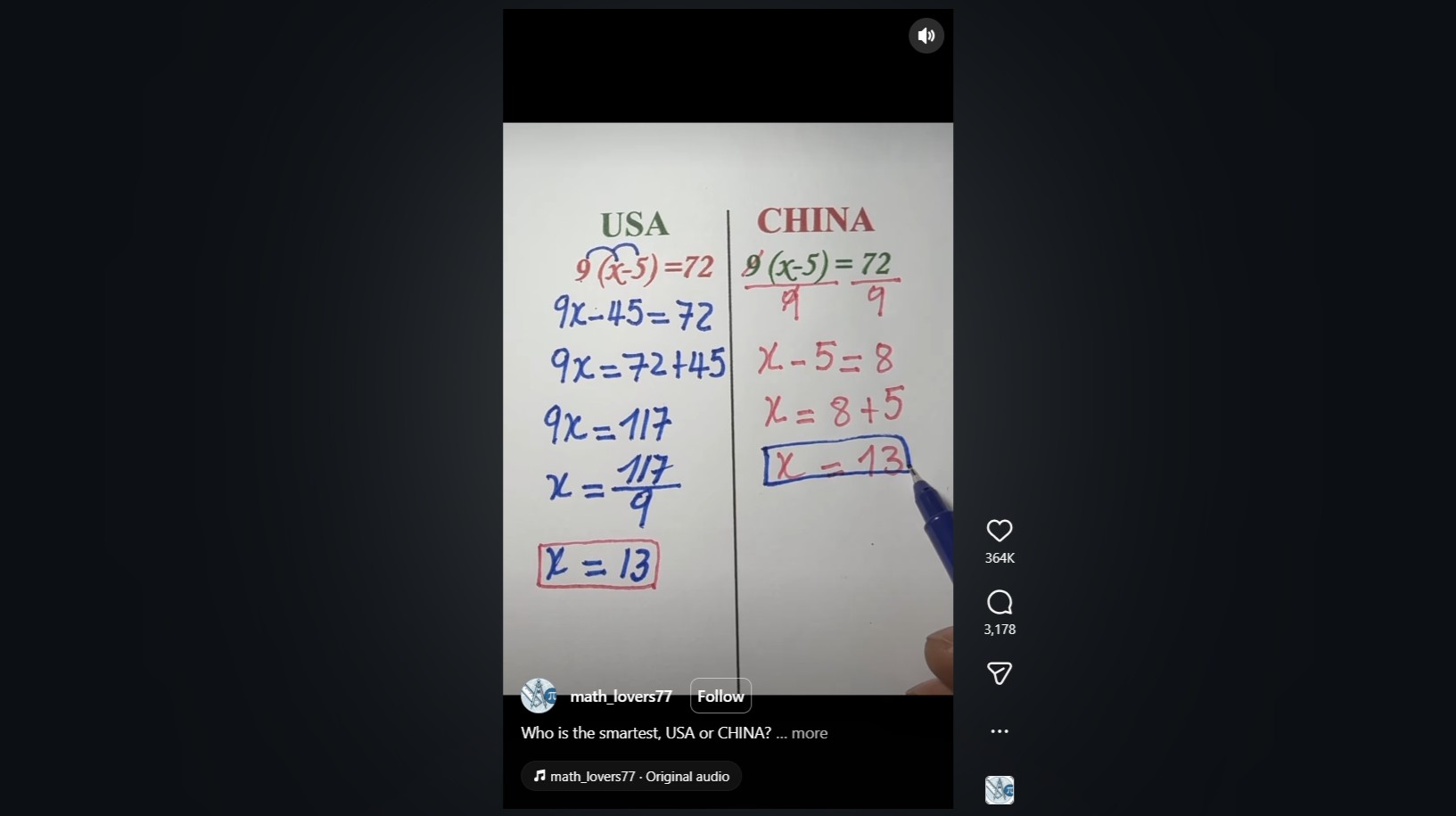
A math problem gets posted online. Three different solutions appear. Half the comments say one way is better. The other half are equally sure the second way is the only right approach.
Sound familiar?
The USA versus China math debate has been bubbling for decades, and it usually ends the same way, with nobody agreeing and everyone a bit confused about what actually matters. Here's the thing though, the real answer is more interesting than just picking a winner.
📱 Source: Ibuerte on Instagram
What the Tests Actually Show
International math rankings, like the PISA scores, consistently place students in China and other East Asian countries ahead of American students in raw computation and speed. That's not really disputed.
What's less understood is what those scores actually measure.
Chinese students often score higher on standardized tests because of extensive practice, strong foundational drilling, and a culture that places enormous value on repetition and mastery. Hours of practice problems. Memorization that becomes automatic. Methods taught and reinforced until they stick.
American students, on the other hand, tend to struggle more with basic speed but often show stronger performance in open-ended problem solving, creative applications, and explaining their reasoning.
Same subject. Very different skills. Very different tests measuring very different things.
Two Ways of Thinking About Math
Teachers who work in both systems have noticed this distinction clearly.
One experienced teacher put it this way after 27 years in the classroom: "We teach both ways in the USA." And that's probably closer to the truth than the either/or framing suggests.
The speed method, the one that often gets associated with Asian education, prioritizes fast, accurate computation. The process is streamlined, practiced, and efficient. You learn the pattern, you apply it, you move on. Students get fast at arriving at the right answer.
The deeper method prioritizes understanding why the process works. Students learn the underlying logic first, then learn shortcuts once they understand the foundation. It takes longer. It sometimes produces slower answers. But the conceptual understanding tends to stick better.
Two approaches, two different strengths
The Shortcut Debate
Here's where parents and teachers get really fired up.
One common complaint about the speed-first approach: it falls apart when the numbers don't cooperate. Take a math problem where you're looking for a pattern that only works if numbers are clean multiples. The fast shortcut works beautifully. But change the numbers slightly and suddenly the shortcut breaks down.
The deeper method, the one that teaches underlying understanding first, handles those surprises better. Students who learned the "why" can adapt. Students who learned only the "how" get stuck.
As one commenter pointed out: "Things get messy if 9 and 72 were not multiples. Hence, the first way is best given it allows understanding of the method. Then you can apply shortcuts."
That reframing is useful. Understanding first, shortcuts after. Not shortcuts instead of understanding.
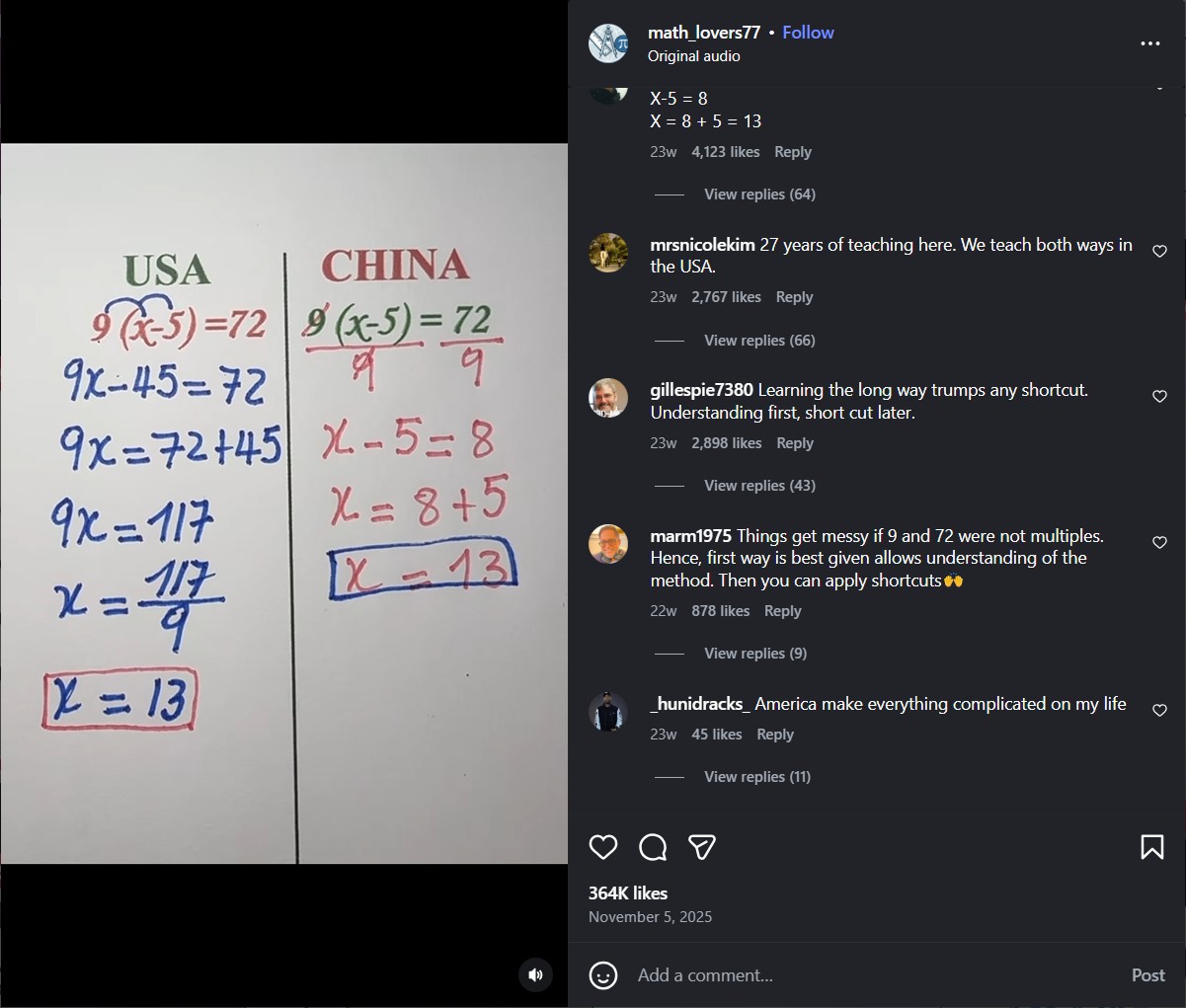 Original post by Ibuerte on Instagram.
What This Means for Your Kid
If your child is learning math, here's the honest takeaway from this debate:
Both approaches have value. Speed and fluency matter. Understanding and reasoning matter more in the long run. The best education probably leans into both, depending on what the child needs at each stage.
A first or second grader benefits enormously from solid foundational practice. Drill that times table until it's automatic. That fluency frees up mental space for harder problems later.
But it should never stop there. Ask your kid to explain how they got the answer. Ask them what would happen if the numbers changed. Ask them why the method works, not just whether they got it right.
That combo of speed plus understanding is the actual goal. And it's more achievable than the debate suggests.
The Bottom Line
The USA versus China math debate isn't really a competition. It's two different educational priorities highlighting two different skill sets.
Speed and accuracy. Or understanding and flexibility. The truth is your kid needs both. And the best math education, whether it leans Asian or Western in style, will eventually deliver both.
Written by Linea. Tried and tested with our kids.*
Linea 
Low-prep activities, cozy traditions, kid-friendly recipes, and curated finds for curious kids.
Learn more about us →