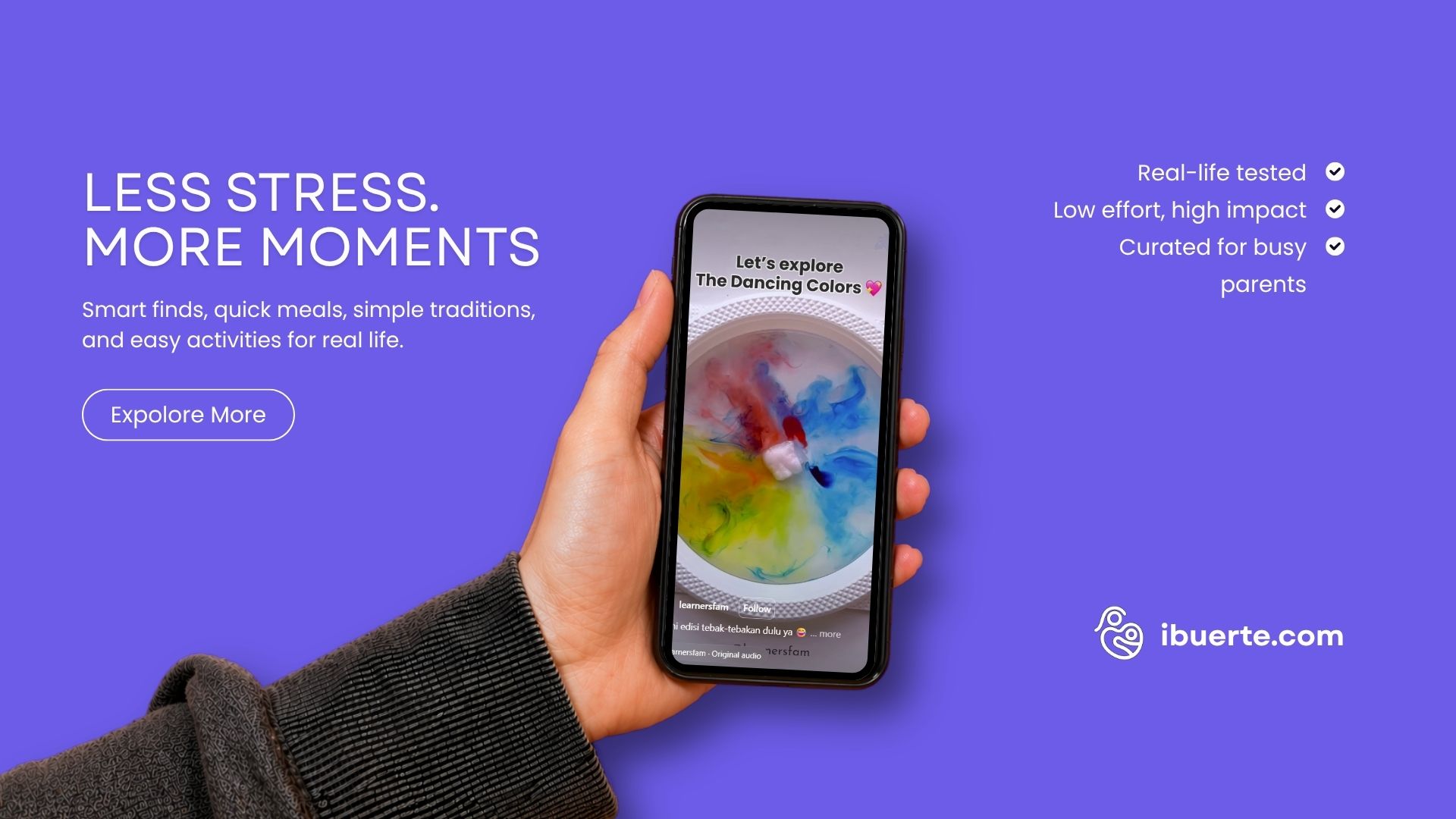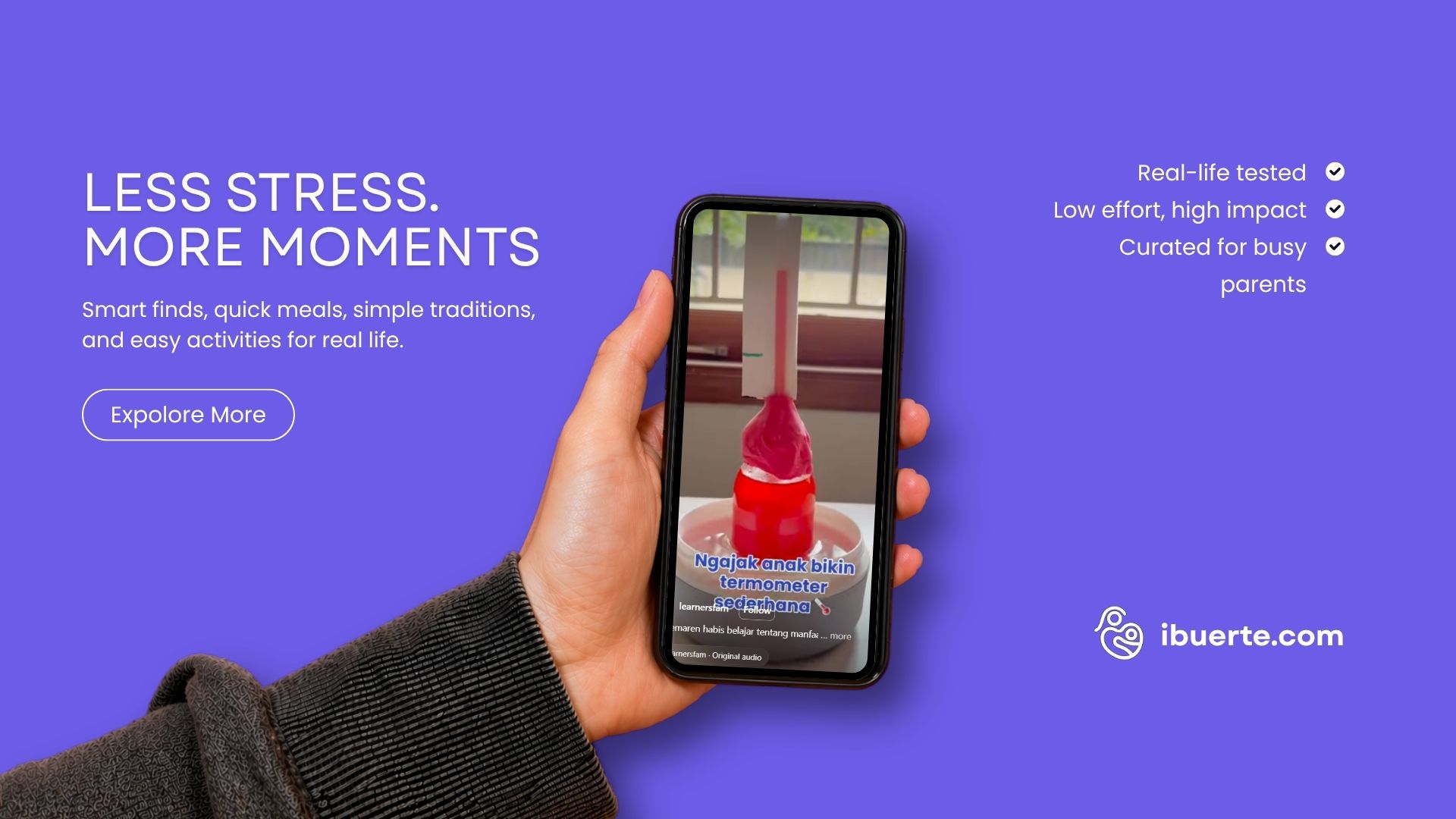

Some of the best STEM moments happen with things you already have at home. This DIY thermometer experiment is one of those activities that takes a few minutes to set up but delivers real learning value.
Kids get to build a working model using a bottle, straw, and colored water, then watch how temperature changes make the liquid move. It turns an abstract concept into something they can see and touch.
📱 Source: @learnersfam on Instagram
What Your Child Will Learn
This experiment introduces real science concepts in a hands-on way. Kids observe how heat causes air and liquids to expand, while cooler temperatures cause them to contract. They see the straw act like a thermometer scale, with the colored water rising and falling as conditions change.
Beyond the science itself, the activity builds observation skills and curiosity. Asking questions like why does the water go up when it is warm becomes a natural part of the process.
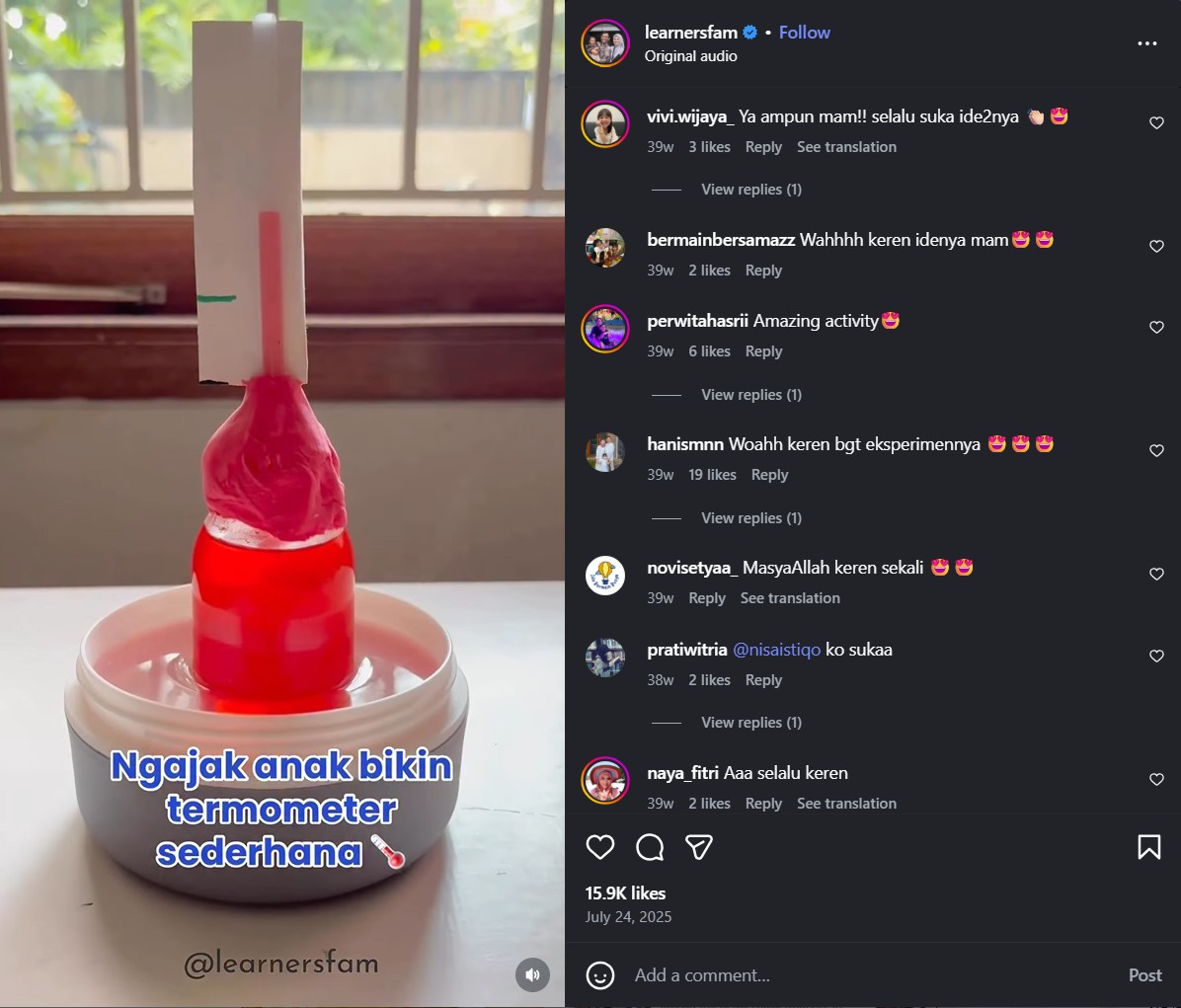 A simple setup with a bottle, straw, and colored water creates a working thermometer model kids can experiment with.
What You Need
The materials are likely already in your kitchen or junk drawer:
- A clear glass or plastic bottle
- A drinking straw
- Water mixed with food coloring
- Modeling clay or playdough to seal around the straw
- A bowl of warm water and a bowl of ice water for testing
No special equipment is needed. Everything is accessible and affordable.
How to Build It
Step 1: Fill the bottle about one-third full with colored water.
Step 2: Place the straw into the bottle so it sits just above the water surface but does not touch the bottom.
Step 3: Seal around the straw at the bottle opening using modeling clay or playdough. Make sure it is tight enough that air cannot escape around the straw.
Step 4: Place the bottle into a bowl of warm water. Watch the colored water rise up the straw. Mark the level with a pen or tape.
Step 5: Move the bottle to ice water and watch the level drop. You now have a working thermometer model.
Watch the Experiment in Action
Making the Most of the Experiment
Encourage your child to test different temperatures and predict what will happen. Does the water rise higher in hotter water? How quickly does it drop in cold water? Keeping a simple log of observations turns this into a genuine science activity.
This is also a great way to introduce vocabulary like expansion, contraction, and temperature in context. The hands-on experience makes these words meaningful rather than abstract.
Linea
Professional mom of three and somehow still standing. Low-prep activities, cozy traditions, kid-friendly recipes & finds for curious kids, because we're all winging it together :)
Learn more about us →