Download the full PDF here
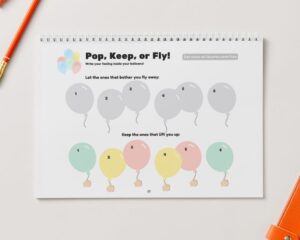
One of the most difficult and most rewarding things that a parent can do is to help children learn to recognize their emotions and how to control them. Children experience all the emotions of adults, but they are not always ready to express them or know how to do it. And that is where the Pop, Keep, or Fly! activity sheet will be useful: a creative, entertaining, and therapeutic method of making children make sense of their experiences.
This is a simple but effective tool that involves the use of balloons as a metaphor of emotions and it teaches children that some feelings should be kept in their hearts, and others should be set free. The goal? To make kids aware, identify, and control their emotions, and, of course, have fun.
Understanding the Tool: The Balloon Metaphor
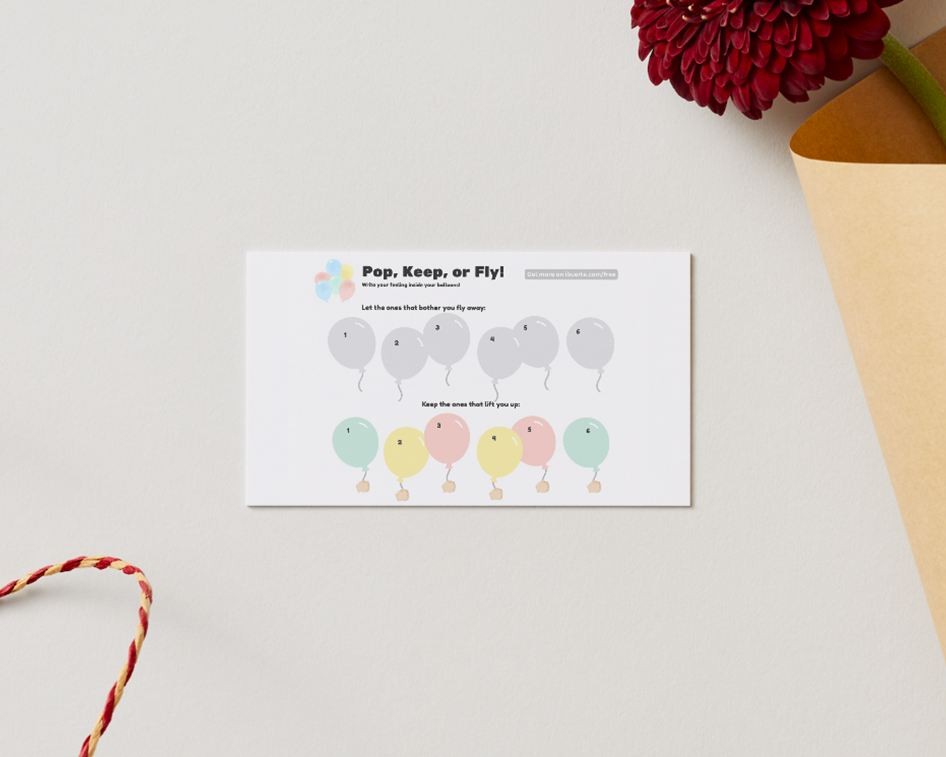
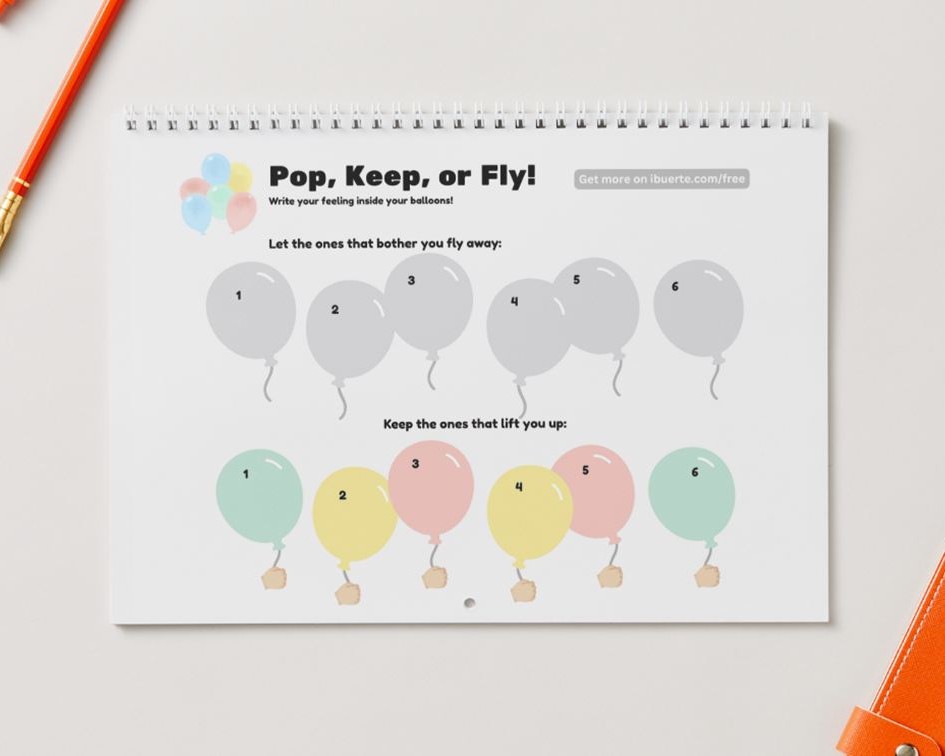
The psycho-therapy concept of externalization, or that there is no particular relationship between feelings and ourselves, is at the core of Pop, Keep, or Fly! when revised with child appeal as a starting point. The emotions are pictured in this activity as balloons that the child can either hold, pop, or release.
Here’s how it works:
1. The Top Balloons, “Pop” or “Fly Away”
They are typically plain or gray balloons that symbolize the unpleasant or heavy emotions, e.g. anger, sadness, frustration, or worry.
- One of these emotions is written in a balloon by the child.
- Then they make a decision, to pop it (release it altogether) or fly it away (release it softly and go)?
This makes children realize that negative feelings do not last forever and that they can be dealt with at any given moment.
2. The Bottom Balloons, “Keep”
They are colorful balloons that are associated with positive and supportive feelings, such as joy, pride, calm, love, or curiosity.
- In each of the keep balloons, the child writes one positive feeling.
- These are the feelings they desire to love, glorify and recall.
The exercise helps us, visually, to understand that some emotions drag us down, and others, on the contrary, make us fly higher, and this is what it means to be a human being.

The Core Benefits and Purpose for Your Child
The Pop, Keep or Fly! activity is the one that enables children to acquire the essential emotional and cognitive skills, all in the form of creative play.
1. Emotional Identification and Labeling
Young children tend to explain that they are either good or bad. This exercise will prompt them to enlarge their emotional vocabulary. Kids start to learn the peculiarities of their emotions by writing certain words such as jealous, peaceful, proud.
2. Teaching Healthy Release, The “Fly Away” Concept
When a child writes a negative feeling and chooses to send it away, he/she is exercising emotional release. This symbolic gesture is a lesson in a vital coping technique, namely, that you can release feelings that do not work to your benefit. Parents can relate this to deep breathing, stretching or even imagining the balloon floating in the air.
3. Encouraging Positive Focus, The “Keep” Concept
Recognizing and retaining the positive emotions, the children are taught to concentrate on gratitude and happiness. It turns into a soft everyday routine of observing what went well and praising it – an ingredient of emotional strength.
4. Promoting Emotional Sorting and Self-Management
Not every negative emotion is negative – there are occasions that sadness or worry is worth preserving to reflect on or relate to. This practice assists children to differentiate between productive and non-productive feelings. As an example, sadness on missing a friend can be stored to be discussed with Mom or Dad, and frustration on losing a game can be flown away.
Training to categorize emotions in this manner develops emotional intelligence, which enables children to respond and not to react.
How Parents Can Use This Sheet Effectively
The key to the success of the Pop, Keep, or Fly! is to ensure that it is a safe, fun and judgment-free environment.
1. Validate All Feelings First
You should not ignore your child before you suggest that he/she should fly his/her feeling away:
“It’s okay to feel angry when your toy broke. That makes sense.”
Validation helps to create trust and learn that every emotion is okay, even the harsh ones.
2. Focus on the Feeling, Not the Child
Talk about emotions as separate from your child’s identity.
“That feeling of worry is like a heavy balloon. Let’s help it float away.”
This strategy teaches that emotions do not make us what we are, but they are experiences that we can control.
3. Create a Physical Ritual
Transform emotional outburst into reality. Children can: after writing down the Pop or Fly balloons:
- Pop (symbolic) Tear up or crumple the paper.
- Place it in a “Release Box”
- Act as though you were blowing up a balloon and letting him go.
This practical aspect enhances the emotional bond and assists in self-regulation in the real-life.
4. Celebrate the Positive
When your child fills out the “Keep” balloons, take time to reflect together:
“What made you feel proud today?”
“What’s one moment you want to keep and remember?”
Such discussions lay the groundwork of positive feelings, which improve the mood and confidence of your child.
The Pop, Keep or Fly! activity is not merely an art project, but it is a strong emotional learning activity in a disguise of a play. It allows children to accept all emotions, choose how to deal with them, and understand that they can choose what will remain in their heart.
This helps children to develop emotional resilience, grow up knowing themselves and appreciating the lives of their fellow human beings -one balloon at a time- thanks to practice by their parents.