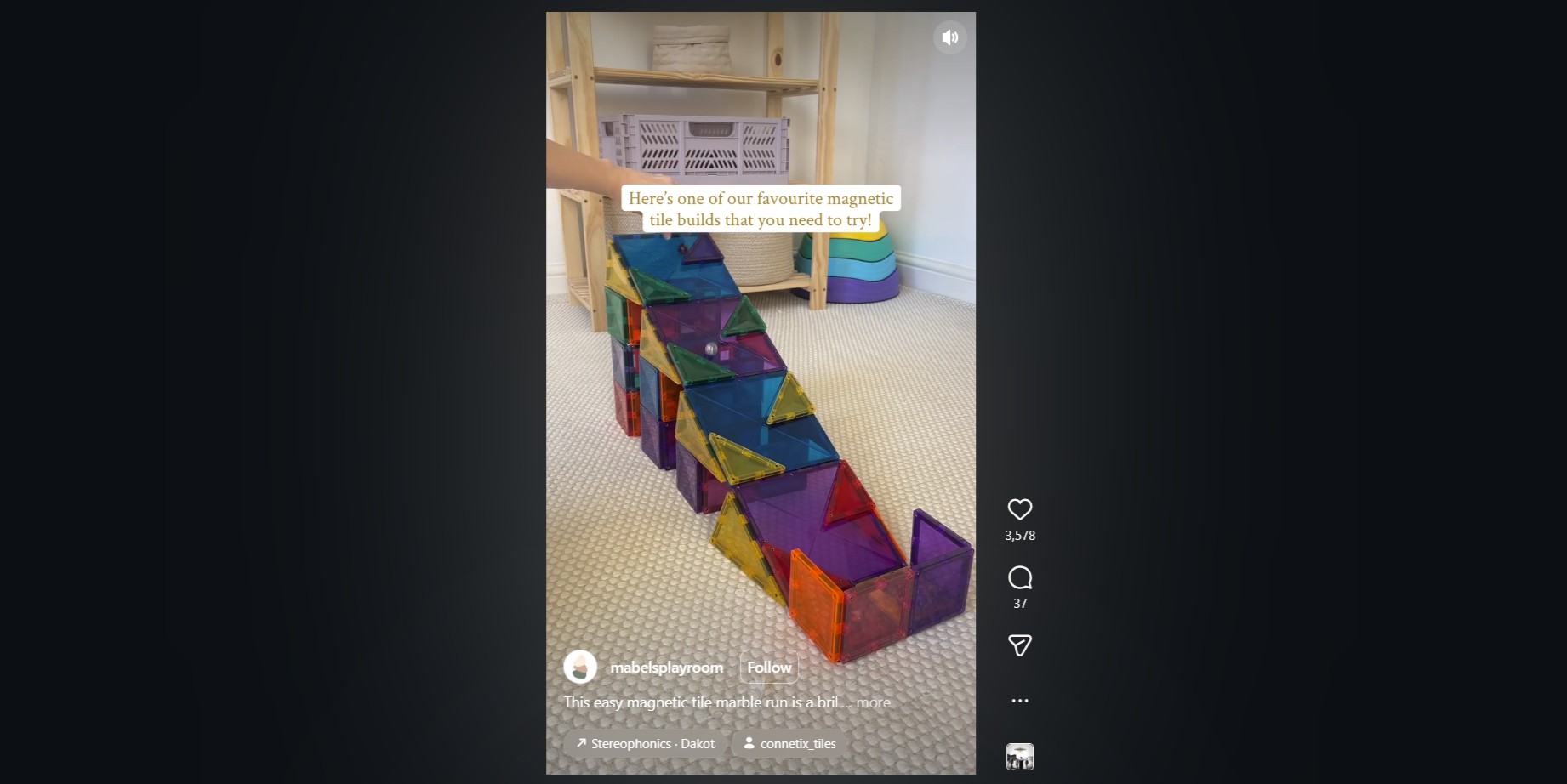
My youngest spent forty-five minutes building a marble run out of magnetic tiles last Tuesday. Forty-five minutes. No screens, no fighting, no “I’m bored.” Just quiet concentration, a few marbles, and a whole lot of learning happening without me having to do much of anything.
That kind of play, the kind that actually holds attention and teaches something? That’s the golden ticket. And this magnetic tile marble run might be the easiest way to get there.
What You Need and How Long It Takes
Setup time: Maybe five minutes if you already have the tiles. Longer if you need to dig them out of the toy corner.
What you’ll need:
- Magnetic tiles (the big ones work best for building ramps)
- A few marbles (the metal kind roll nicely on these tiles)
- Flat surface to build on
That’s it. No special setup, no mess to clean up afterward.
Building the Marble Run
Start simple. Take two tiles, connect them to form a ramp, and let your kid drop a marble from the top. Watch where it goes.
Then let them build from there.
The beauty of magnetic tiles is how forgiving they are. You can tilt them, adjust the angle, add more tiles to make the track longer. If it doesn’t work, you just try again. Trial and error is built right into the process.
Kids naturally start experimenting. “What if I make it steeper?” “What happens if I add a turn?” They don’t realize they’re learning about gravity, slope, and cause and effect. They just know it’s fun to watch the marble roll.
The Hole Tile Trick
Here’s the part that kept my youngest engaged for that full forty-five minutes.
Add a tile with holes in it at the bottom of your run. The marble has to land perfectly to go through. Getting it to drop through feels like hitting a bullseye.
This is where the real problem-solving kicks in. Kids start adjusting the angle, the speed, the height. They iterate. They experiment. They get frustrated and then figure it out.
That struggle, followed by success, is exactly what STEM play is supposed to feel like.
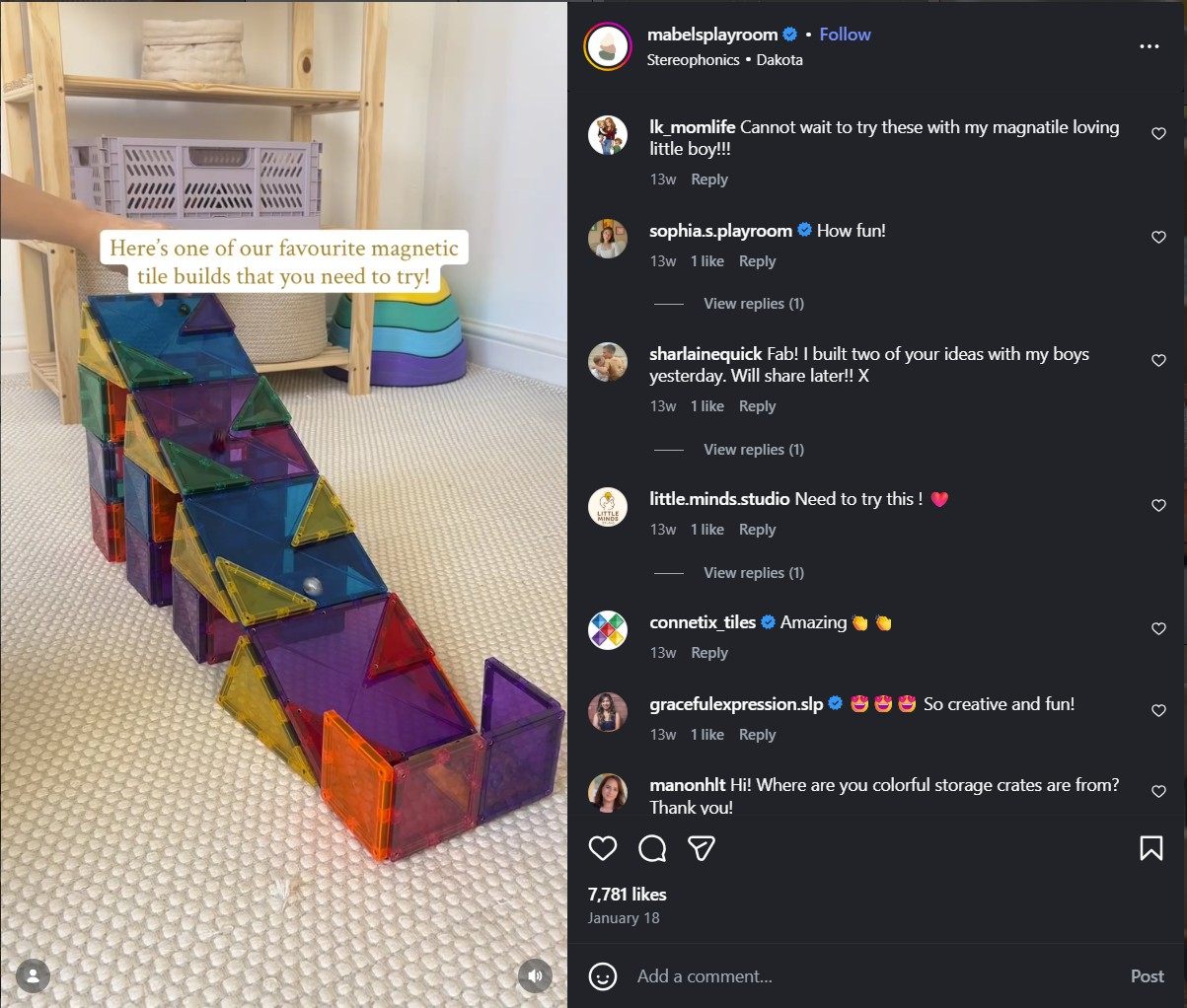 The hole tile adds the perfect challenge
What Kids Actually Learn
While they’re building and experimenting, here’s what’s happening:
- Gravity — they see it work, every single run
- Cause and effect — tilt the ramp, the marble goes faster
- Problem-solving — why didn’t the marble go where I wanted?
- Fine motor skills — connecting tiles, placing marbles, adjusting angles
- Persistence — trying again when it doesn’t work
All of it happens through play. No worksheets, no flashcards, no me standing over them explaining anything.
Video Demo
What Parents Are Saying
“Was literally trying to build something like this yesterday and gave up! 😂 thanks!! X”
— @inspired_byclaire · Instagram
“We’ve tried to do this but we don’t have those larger tiles to make the actual ramp. Where did you get yours from? Thanks ❤️”
— @hannahkyriakoudesign · Instagram
“Cannot wait to try these with my magnatile loving little boy!!!”
— @lk_momlife · Instagram
“Fab! I built two of your ideas with my boys yesterday. Will share later!! X”
— @sharlainequick · Instagram
“😍😍😍 So creative and fun!”
— @gracefulexpression.slp · Instagram
Who This Is For
This activity works best if you have kids who love building and experimenting. If your kid enjoys stacking, connecting, and figuring out how things work, they’ll probably love this. If they’re newer to magnetic tiles, start with simpler builds and let them discover.
It’s also great for siblings playing together. Older kids can help younger ones, and the challenge aspect keeps everyone engaged.
The Bottom Line
You already have the tiles. You probably have some marbles somewhere in the house. Put them together, step back, and let your kid figure out the rest.
Sometimes the best STEM activities are the ones that take zero prep and hold attention for almost an hour.
Sarah writes about playful learning and simple activities that actually work. This post reflects real experience testing activities with her kids.