

If your child has ADHD and writing feels like a daily battle, the reason might not be attention alone. A retained primitive reflex called the Palmar Grasp Reflex could be making handwriting physically harder than it needs to be.
This reflex is normal in infants, helping them grip and hold. When it stays active beyond the developmental window, it can interfere with fine motor control in older children. The hands may tighten or react unintentionally to touch, making the physical act of writing feel exhausting and frustrating.
📱 Source: @brainandbodyhealth_ on Instagram
How the Palmar Grasp Reflex Affects Writing
When the Palmar Grasp Reflex is still active, children may grip their pencil too tightly or have difficulty releasing their grip between letters. This adds physical fatigue on top of the concentration challenges that ADHD already brings.
The result can look like reluctance to write, messy handwriting, or complaints of hand tiredness. These are often misunderstood as laziness or lack of effort, when the real cause is neurological rather than behavioral.
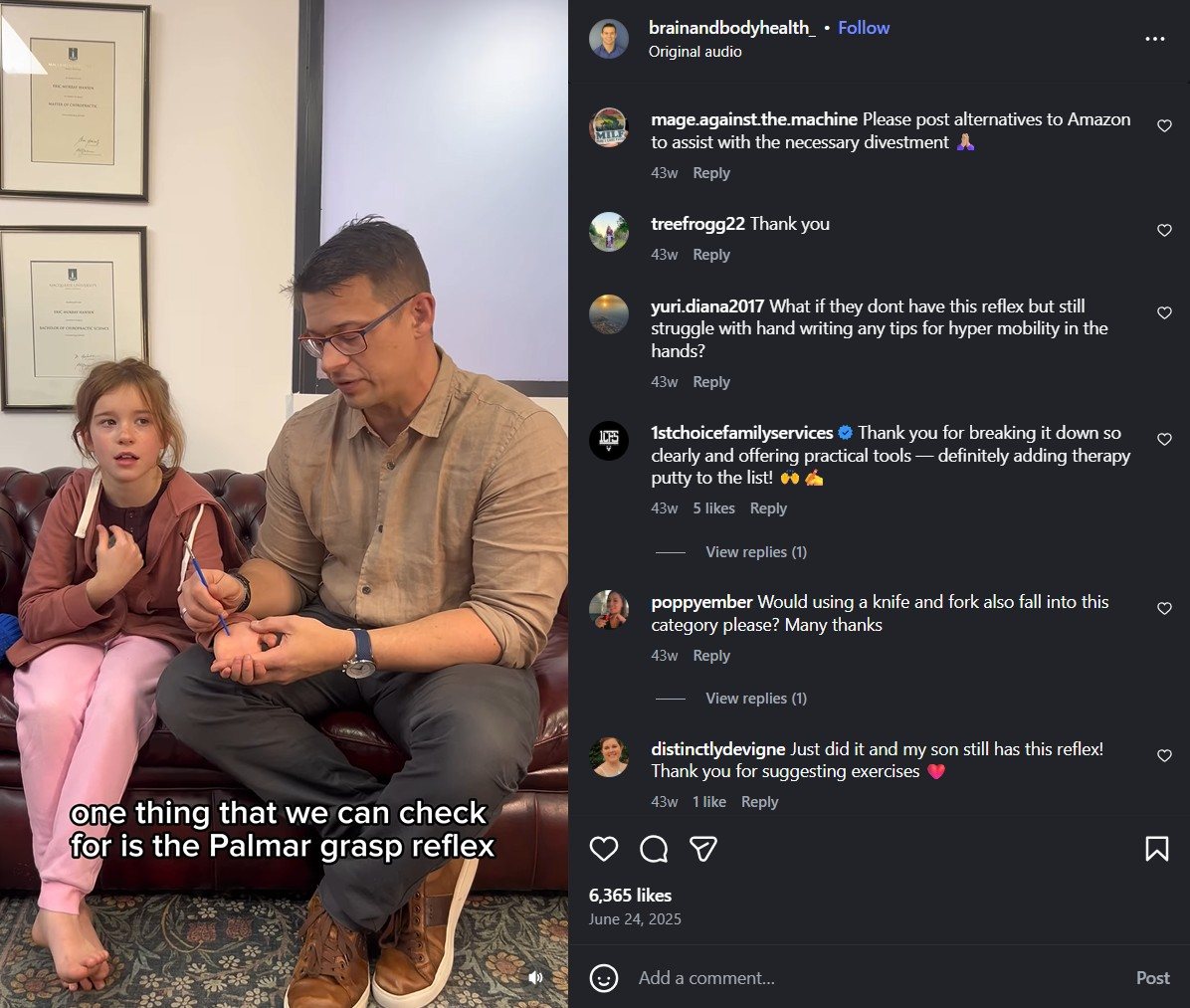 A retained primitive reflex can make the physical act of writing harder for children with ADHD, even when they are trying their best.
A Simple At-Home Test
You can check for a retained Palmar Grasp Reflex with a light touch. Gently stroke the palm of your child is hand near the base of their fingers. If the fingers curl inward involuntarily, the reflex may still be present.
This is not a diagnosis, but it can help parents understand whether a physical reflex issue is contributing to writing difficulties. A pediatric occupational therapist can confirm and guide further support.
Supportive Hand Exercises
Short, consistent play with the hands can help with motor integration over time. Activities that encourage finger stretching, gripping and releasing, and sensory play with different textures all contribute to better hand control.
These exercises are not a replacement for professional therapy, but they are a practical starting point that families can begin at home without special equipment.
Watch the Explanation and Exercises
What Parents Can Do
Start with the simple test and observe. If you notice signs of a retained reflex, look into occupational therapy resources that specialize in reflex integration. Meanwhile, offer hand exercises as part of daily play. Even a few minutes a day can lead to noticeable improvement over weeks.
Above all, reassure your child that the struggle is real and that you are working on it together. Understanding the why behind the difficulty changes the conversation from frustration to problem-solving.
Linea
Professional mom of three and somehow still standing. Low-prep activities, cozy traditions, kid-friendly recipes & finds for curious kids, because we're all winging it together :)
Learn more about us →