<?xml version="1.0" encoding="utf-8"?><feed xmlns="http://www.w3.org/2005/Atom" xml:lang="en"><generator uri="https://jekyllrb.com/" version="4.4.1">Jekyll</generator><link href="https://ibuerte.com/feed.xml" rel="self" type="application/atom+xml" /><link href="https://ibuerte.com/" rel="alternate" type="text/html" hreflang="en" /><updated>2026-04-23T09:57:26+00:00</updated><id>https://ibuerte.com/feed.xml</id><title type="html">Ibuerte Play</title><subtitle>A focused parenting guide built around four core pillars: product finds, kitchen survival, family tradition, and low-prep activities.</subtitle><author><name>Ibuerte Editors</name></author><entry><title type="html">USA vs China: Who’s Really Better at Math?</title><link href="https://ibuerte.com/play/activities/usa-vs-china-math-comparison/" rel="alternate" type="text/html" title="USA vs China: Who’s Really Better at Math?" /><published>2026-04-23T09:09:00+00:00</published><updated>2026-04-23T09:09:00+00:00</updated><id>https://ibuerte.com/play/activities/usa-vs-china-math-comparison</id><content type="html" xml:base="https://ibuerte.com/play/activities/usa-vs-china-math-comparison/"><![CDATA[<p>A math problem gets posted online. Three different solutions appear. Half the comments say one way is better. The other half are equally sure the second way is the only right approach.</p>

<p>Sound familiar?</p>

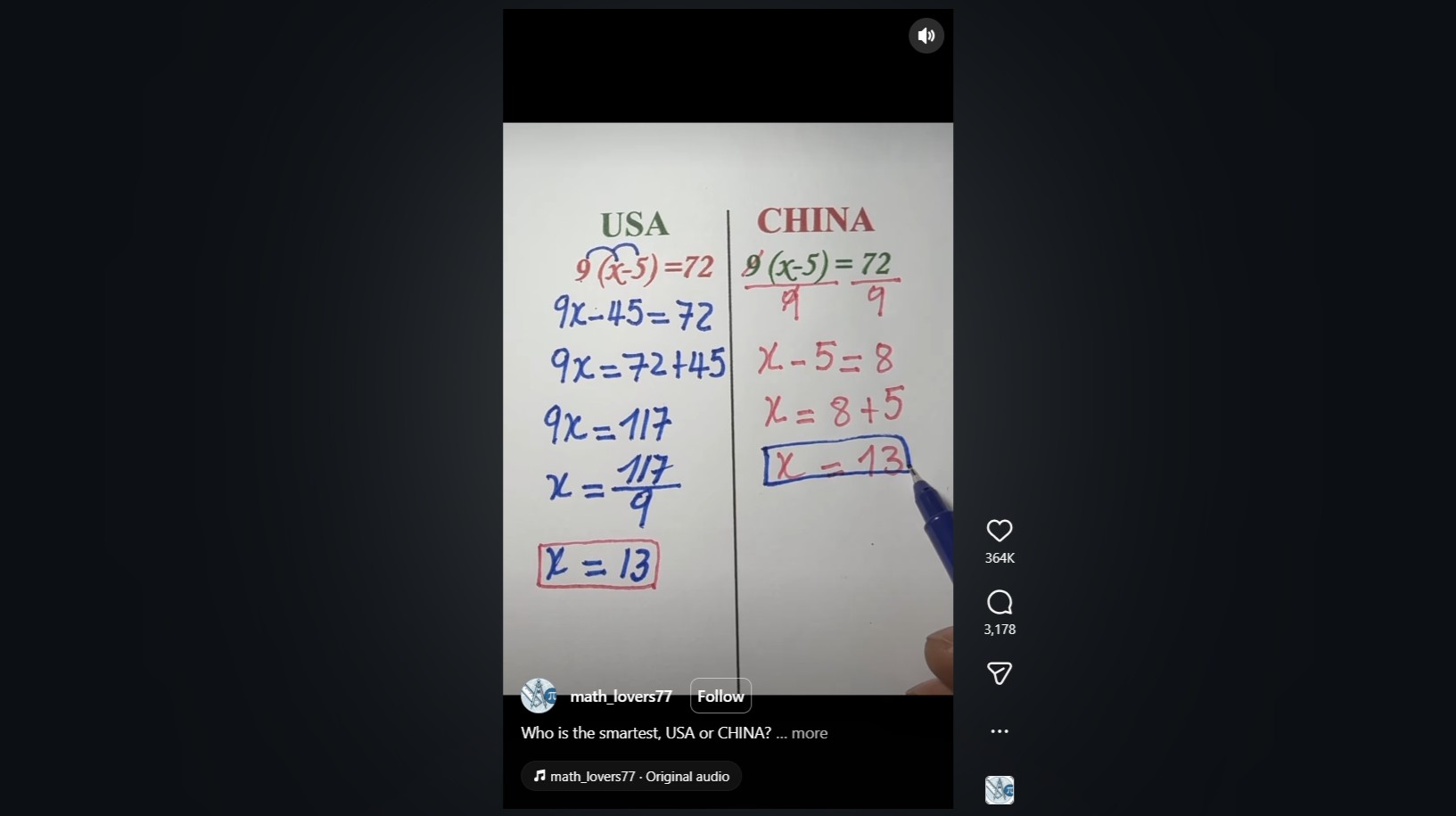
<p>The USA versus China math debate has been bubbling for decades, and it usually ends the same way, with nobody agreeing and everyone a bit confused about what actually matters. Here’s the thing though, the real answer is more interesting than just picking a winner.</p>

<h2 id="what-the-tests-actually-show">What the Tests Actually Show</h2>

<p>International math rankings, like the PISA scores, consistently place students in China and other East Asian countries ahead of American students in raw computation and speed. That’s not really disputed.</p>

<p>What’s less understood is what those scores actually measure.</p>

<p>Chinese students often score higher on standardized tests because of extensive practice, strong foundational drilling, and a culture that places enormous value on repetition and mastery. Hours of practice problems. Memorization that becomes automatic. Methods taught and reinforced until they stick.</p>

<p>American students, on the other hand, tend to struggle more with basic speed but often show stronger performance in open-ended problem solving, creative applications, and explaining their reasoning.</p>

<p>Same subject. Very different skills. Very different tests measuring very different things.</p>

<h2 id="two-ways-of-thinking-about-math">Two Ways of Thinking About Math</h2>

<p>Teachers who work in both systems have noticed this distinction clearly.</p>

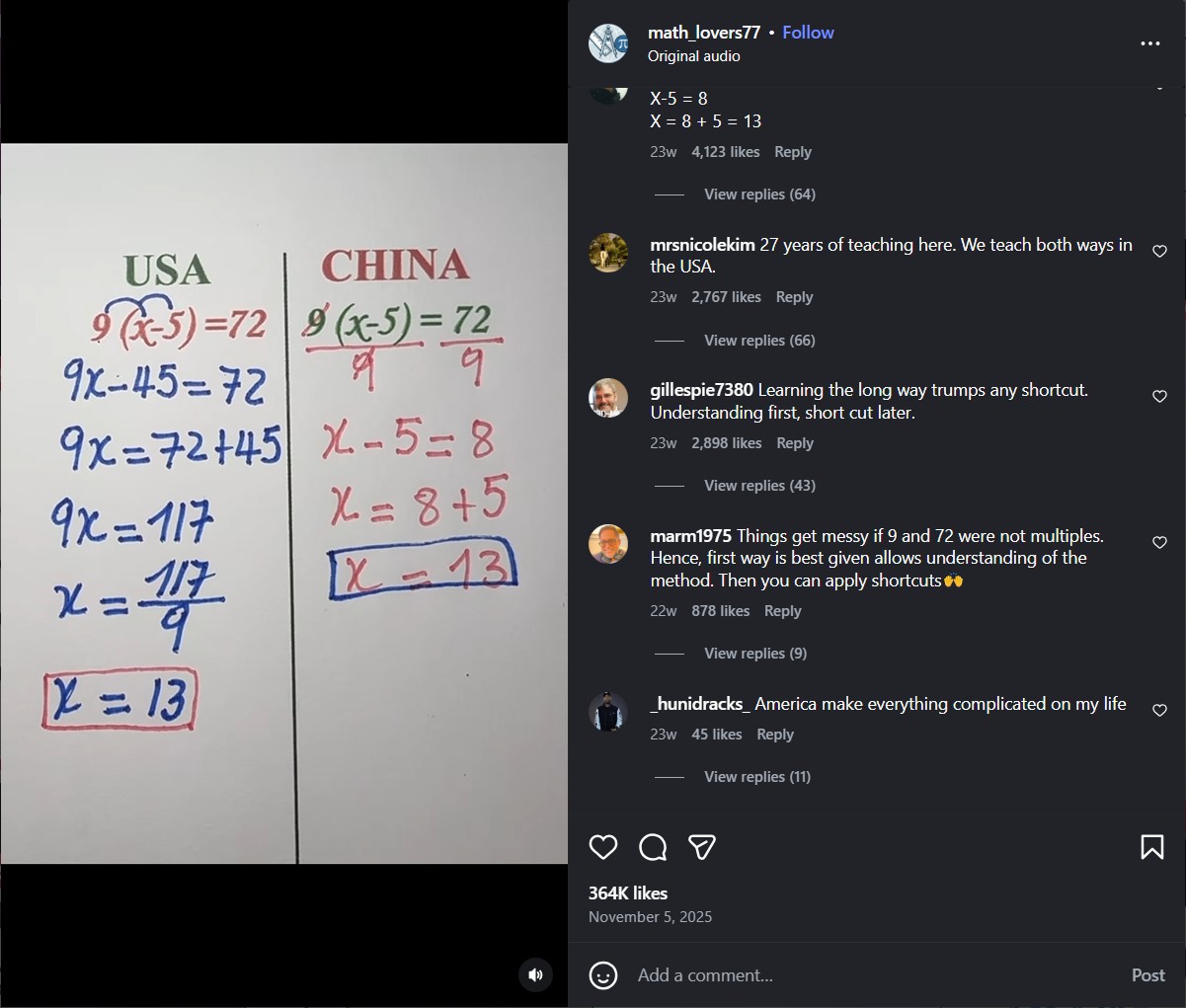
<p>One experienced teacher put it this way after 27 years in the classroom: “We teach both ways in the USA.” And that’s probably closer to the truth than the either/or framing suggests.</p>

<p>The speed method, the one that often gets associated with Asian education, prioritizes fast, accurate computation. The process is streamlined, practiced, and efficient. You learn the pattern, you apply it, you move on. Students get fast at arriving at the right answer.</p>

<p>The deeper method prioritizes understanding why the process works. Students learn the underlying logic first, then learn shortcuts once they understand the foundation. It takes longer. It sometimes produces slower answers. But the conceptual understanding tends to stick better.</p>

<p><img src="https://cdn.emzeth.com/ib/usa-vs-china-math.jpg" alt="usa-vs-china-math.jpg" />
<em>Two approaches, two different strengths</em></p>

<h2 id="the-shortcut-debate">The Shortcut Debate</h2>

<p>Here’s where parents and teachers get really fired up.</p>

<p>One common complaint about the speed-first approach: it falls apart when the numbers don’t cooperate. Take a math problem where you’re looking for a pattern that only works if numbers are clean multiples. The fast shortcut works beautifully. But change the numbers slightly and suddenly the shortcut breaks down.</p>

<p>The deeper method, the one that teaches underlying understanding first, handles those surprises better. Students who learned the “why” can adapt. Students who learned only the “how” get stuck.</p>

<p>As one commenter pointed out: “Things get messy if 9 and 72 were not multiples. Hence, the first way is best given it allows understanding of the method. Then you can apply shortcuts.”</p>

<p>That reframing is useful. Understanding first, shortcuts after. Not shortcuts instead of understanding.</p>

<h2 id="what-this-means-for-your-kid">What This Means for Your Kid</h2>

<p>If your child is learning math, here’s the honest takeaway from this debate:</p>

<p>Both approaches have value. Speed and fluency matter. Understanding and reasoning matter more in the long run. The best education probably leans into both, depending on what the child needs at each stage.</p>

<p>A first or second grader benefits enormously from solid foundational practice. Drill that times table until it’s automatic. That fluency frees up mental space for harder problems later.</p>

<p>But it should never stop there. Ask your kid to explain how they got the answer. Ask them what would happen if the numbers changed. Ask them why the method works, not just whether they got it right.</p>

<p>That combo of speed plus understanding is the actual goal. And it’s more achievable than the debate suggests.</p>

<h2 id="video-test-yourself">Video: Test Yourself</h2>

<video width="100%" controls="" style="border-radius: 8px; margin-top: 20px; margin-bottom: 20px;">
  <source src="https://cdn.emzeth.com/ib/usa-vs-china-math.mp4" type="video/mp4" />
  Your browser does not support the video tag.
</video>

<h2 id="what-teachers-and-parents-are-saying">What Teachers and Parents Are Saying</h2>

<blockquote>
  <p><em>“27 years of teaching here. We teach both ways in the USA.”</em></p>

  <p>— <strong>@mrsnicolekim</strong> · Instagram</p>
</blockquote>

<blockquote>
  <p><em>“Learning the long way trumps any shortcut. Understanding first, shortcut later.”</em></p>

  <p>— <strong>@gillespie7380</strong> · Instagram</p>
</blockquote>

<blockquote>
  <p><em>“Things get messy if 9 and 72 were not multiples. Hence, first way is best given it allows understanding of the method. Then you can apply shortcuts 🙌”</em></p>

  <p>— <strong>@marm1975</strong> · Instagram</p>
</blockquote>

<h2 id="who-this-is-for">Who This Is For</h2>

<p>This article is for parents who feel pressure around their child’s math education, and for anyone who’s watched the online math debate unfold without having context for what the actual arguments are about.</p>

<p>It’s also for teachers who want a shareable way to explain to parents why understanding matters as much as speed.</p>

<h2 id="the-bottom-line">The Bottom Line</h2>

<p>The USA versus China math debate isn’t really a competition. It’s two different educational priorities highlighting two different skill sets.</p>

<p>Speed and accuracy. Or understanding and flexibility. The truth is your kid needs both. And the best math education, whether it leans Asian or Western in style, will eventually deliver both.</p>

<p><img src="https://cdn.emzeth.com/ib/usa-vs-china-math-instagram.jpg" alt="usa-vs-china-math-instagram.jpg" /></p>

<p><em>Sarah writes about playful learning and simple activities that actually work. This post reflects real experience testing activities with her kids.</em></p>]]></content><author><name>Ibuerte Editors</name></author><category term="activities" /><category term="math education" /><category term="USA vs China math" /><category term="STEM" /><category term="quick math tricks" /><category term="mental math" /><category term="education systems" /><category term="problem solving" /><category term="teaching math" /><category term="kids math" /><category term="learning styles" /><summary type="html"><![CDATA[Speed and rigor versus creativity and reasoning. The math education debate goes deeper than test scores.]]></summary><media:thumbnail xmlns:media="http://search.yahoo.com/mrss/" url="https://cdn.emzeth.com/ib/usa-vs-china-math.jpg" /><media:content medium="image" url="https://cdn.emzeth.com/ib/usa-vs-china-math.jpg" xmlns:media="http://search.yahoo.com/mrss/" /></entry><entry><title type="html">DIY Paper Cup Helicopter: Simple STEM Fun for Kids</title><link href="https://ibuerte.com/play/activities/paper-cup-helicopter-diy-stem/" rel="alternate" type="text/html" title="DIY Paper Cup Helicopter: Simple STEM Fun for Kids" /><published>2026-04-23T09:05:00+00:00</published><updated>2026-04-23T09:05:00+00:00</updated><id>https://ibuerte.com/play/activities/paper-cup-helicopter-diy-stem</id><content type="html" xml:base="https://ibuerte.com/play/activities/paper-cup-helicopter-diy-stem/"><![CDATA[<p>My daughter looked at the crumpled paper cup on the table and shrugged. “It’s just a cup, Mum.” Three minutes later, it was spinning in the air like a tiny helicopter and she couldn’t stop giggling.</p>

<p>That’s the thing about this project. It looks impossibly simple, almost too basic to work. And then it does work, and suddenly your kid wants to build five more.</p>

<h2 id="what-you-need-and-how-long-it-takes">What You Need and How Long It Takes</h2>

<p><strong>Setup time:</strong> Under five minutes</p>

<p><strong>What you’ll need:</strong></p>
<ul>
  <li>2 paper cups (the cheap thin ones work best)</li>
  <li>Scissors</li>
  <li>A pencil or small stick</li>
  <li>An open space to drop it from</li>
</ul>

<p>No glue, no tape, no special kit. Just stuff you already have in a kitchen drawer.</p>

<h2 id="how-to-build-it">How to Build It</h2>

<p><strong>Step 1:</strong> Stack the two cups together with the rims facing the same direction. The bottom cup is your body.</p>

<p><strong>Step 2:</strong> Cut four slits evenly spaced around the rim of the top cup. Each slit should be about 3cm long.</p>

<p><strong>Step 3:</strong> Fold each cut strip outward at a slight angle. These become your rotor blades.</p>

<p><strong>Step 4:</strong> Poke a pencil through the very center of the stacked cups and slide them down to the bottom third of the pencil. This is your axle.</p>

<p><strong>Step 5:</strong> Drop it. The cups will spin as they fall.</p>

<p>That’s the whole build. Seriously.</p>

<p><img src="https://cdn.emzeth.com/ib/paper-cup-helicopter.jpg" alt="paper-cup-helicopter.jpg" />
<em>Simple materials, impressive results</em></p>

<h2 id="the-physics-bit-without-making-it-boring">The Physics Bit (Without Making It Boring)</h2>

<p>Here’s what actually happens when you drop it.</p>

<p>Air pushes against the angled rotor blades as the cup falls. Because the blades are cut and angled asymmetrically, the air makes them spin. The faster it falls, the faster it spins.</p>

<p>Your kid doesn’t need to know this for it to be fun. But if they ask, a simple explanation works perfectly. “The air pushes the blades and makes them spin, just like a real helicopter, only a real helicopter pushes air down to go up.”</p>

<p>Which brings me to something important.</p>

<h2 id="a-note-on-that-viral-disclaimer">A Note on That Viral Disclaimer</h2>

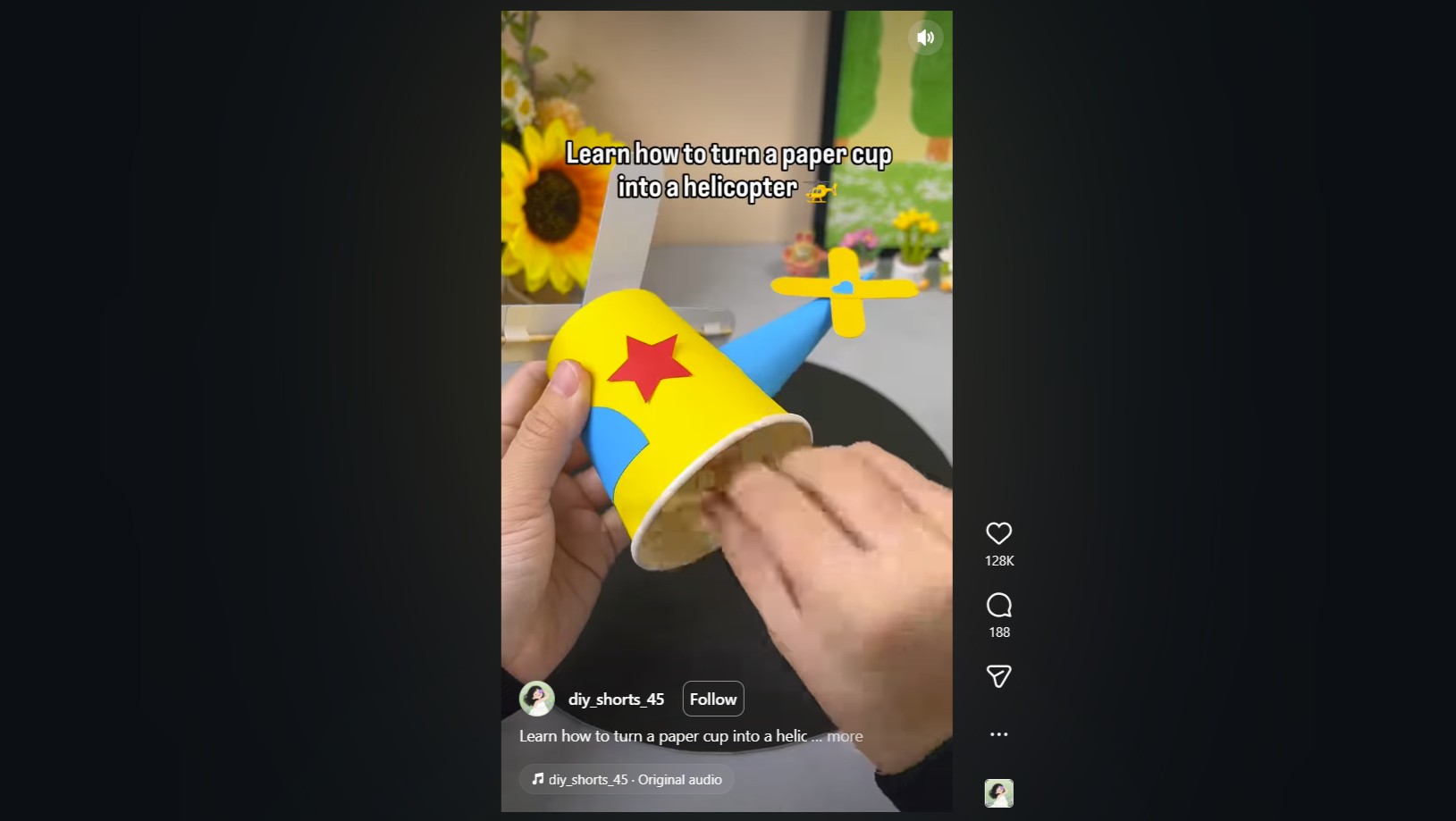
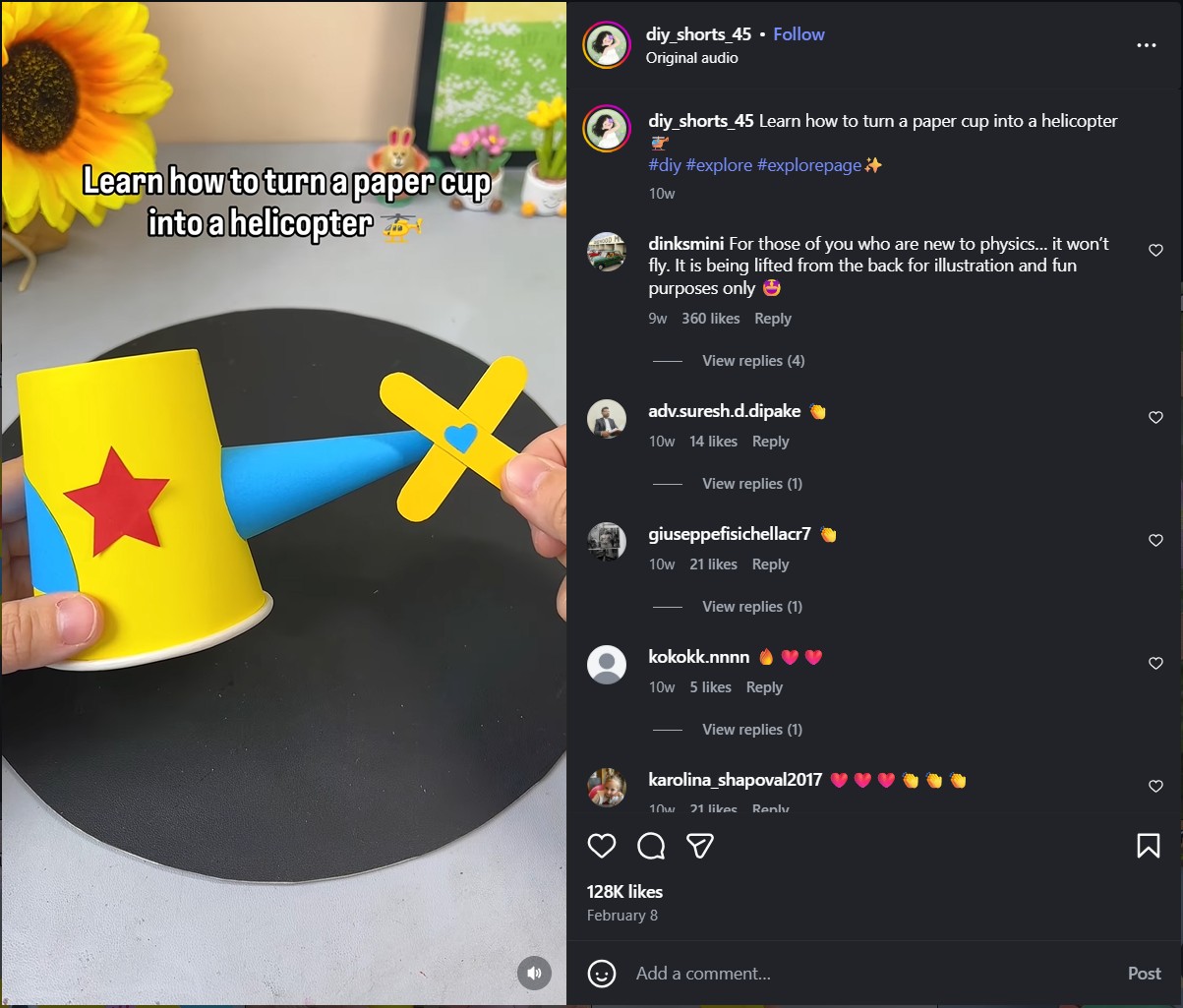
<p>If you’ve seen this craft on social media, you might have noticed creators clarifying something important. The spinning cup helicopter won’t fly. It’s not a drone. It won’t lift off the ground on its own.</p>

<p>As one creator put it with a laugh: “For those of you who are new to physics, it won’t fly. It is being lifted from the back for illustration and fun purposes only.”</p>

<p>This is honest and worth sharing with your kids. The helicopter spins, but it falls down. That’s gravity working. And actually, noticing that, asking why it spins but still falls, that’s the best kind of science question.</p>

<h2 id="what-kids-actually-learn">What Kids Actually Learn</h2>

<ul>
  <li><strong>Air resistance</strong> — they feel it work</li>
  <li><strong>Gravity</strong> — it falls every single time</li>
  <li><strong>Motion and rotation</strong> — watching what makes it spin faster or slower</li>
  <li><strong>Cause and effect</strong> — steeper angle, faster spin</li>
  <li><strong>Fine motor skills</strong> — cutting, folding, building</li>
</ul>

<p>All of it through a five-minute craft that costs nothing.</p>

<h2 id="experiment-ideas">Experiment Ideas</h2>

<p>Once the basic build works, challenge your kid to try variations:</p>

<ul>
  <li>Cut the blades at different angles</li>
  <li>Use one cup vs. two cups</li>
  <li>Try dropping from different heights</li>
  <li>Time how long it takes to fall and spin</li>
</ul>

<p>The experiments are endless and all of them are free.</p>

<h2 id="video-demo">Video Demo</h2>

<video width="100%" controls="" style="border-radius: 8px; margin-top: 20px; margin-bottom: 20px;">
  <source src="https://cdn.emzeth.com/ib/paper-cup-helicopter.mp4" type="video/mp4" />
  Your browser does not support the video tag.
</video>

<h2 id="what-parents-are-saying">What Parents Are Saying</h2>

<blockquote>
  <p><em>“For those of you who are new to physics, it won’t fly. It is being lifted from the back for illustration and fun purposes only 🤩”</em></p>

  <p>— <strong>@dinksmini</strong> · Instagram</p>
</blockquote>

<blockquote>
  <p><em>“That’s so good, perfect for my new venture supporting home schoolers outside of the current education system, feel free to follow to find out more x”</em></p>

  <p>— <strong>@shonalivingston_rowe</strong> · Instagram</p>
</blockquote>

<h2 id="who-this-is-for">Who This Is For</h2>

<p>This is a great first craft for younger kids who can’t use scissors confidently yet, because the cuts are simple and forgiving. It’s also perfect for older kids who want to experiment and learn through trial and error.</p>

<p>Teachers and homeschool parents love this one too. It takes almost no prep, uses almost no supplies, and teaches real physics concepts without a textbook in sight.</p>

<h2 id="the-bottom-line">The Bottom Line</h2>

<p>Two paper cups and a pair of scissors. That’s the entire supply list. Five minutes later, your kid is dropping their creation, watching it spin, and accidentally learning about air movement and gravity.</p>

<p>Sometimes the best STEM activities are the cheapest ones.</p>

<p><img src="https://cdn.emzeth.com/ib/paper-cup-helicopter-instagram.jpg" alt="paper-cup-helicopter-instagram.jpg" />
<em>The finished helicopter spinning on its way down</em></p>
<p><em>Sarah writes about playful learning and simple activities that actually work. This post reflects real experience testing activities with her kids.</em></p>]]></content><author><name>Ibuerte Editors</name></author><category term="activities" /><category term="paper cup craft" /><category term="DIY helicopter" /><category term="STEM activities" /><category term="kids craft" /><category term="air movement" /><category term="physics for kids" /><category term="open-ended play" /><category term="toddler activities" /><category term="paper craft" /><category term="fine motor skills" /><summary type="html"><![CDATA[Turn a paper cup into a spinning helicopter with this easy DIY craft that teaches air movement and motion.]]></summary><media:thumbnail xmlns:media="http://search.yahoo.com/mrss/" url="https://cdn.emzeth.com/ib/paper-cup-helicopter.jpg" /><media:content medium="image" url="https://cdn.emzeth.com/ib/paper-cup-helicopter.jpg" xmlns:media="http://search.yahoo.com/mrss/" /></entry><entry><title type="html">Magnetic Tile Marble Run: Fun &amp;amp; Easy STEM Play for Kids</title><link href="https://ibuerte.com/play/activities/magnetic-tile-marble-run-stem-play/" rel="alternate" type="text/html" title="Magnetic Tile Marble Run: Fun &amp;amp; Easy STEM Play for Kids" /><published>2026-04-23T07:42:00+00:00</published><updated>2026-04-23T07:42:00+00:00</updated><id>https://ibuerte.com/play/activities/magnetic-tile-marble-run-stem-play</id><content type="html" xml:base="https://ibuerte.com/play/activities/magnetic-tile-marble-run-stem-play/"><![CDATA[<p>My youngest spent forty-five minutes building a marble run out of magnetic tiles last Tuesday. Forty-five minutes. No screens, no fighting, no “I’m bored.” Just quiet concentration, a few marbles, and a whole lot of learning happening without me having to do much of anything.</p>

<p>That kind of play, the kind that actually holds attention and teaches something? That’s the golden ticket. And this magnetic tile marble run might be the easiest way to get there.</p>

<h2 id="what-you-need-and-how-long-it-takes">What You Need and How Long It Takes</h2>

<p><strong>Setup time:</strong> Maybe five minutes if you already have the tiles. Longer if you need to dig them out of the toy corner.</p>

<p><strong>What you’ll need:</strong></p>
<ul>
  <li>Magnetic tiles (the big ones work best for building ramps)</li>
  <li>A few marbles (the metal kind roll nicely on these tiles)</li>
  <li>Flat surface to build on</li>
</ul>

<p>That’s it. No special setup, no mess to clean up afterward.</p>

<h2 id="building-the-marble-run">Building the Marble Run</h2>

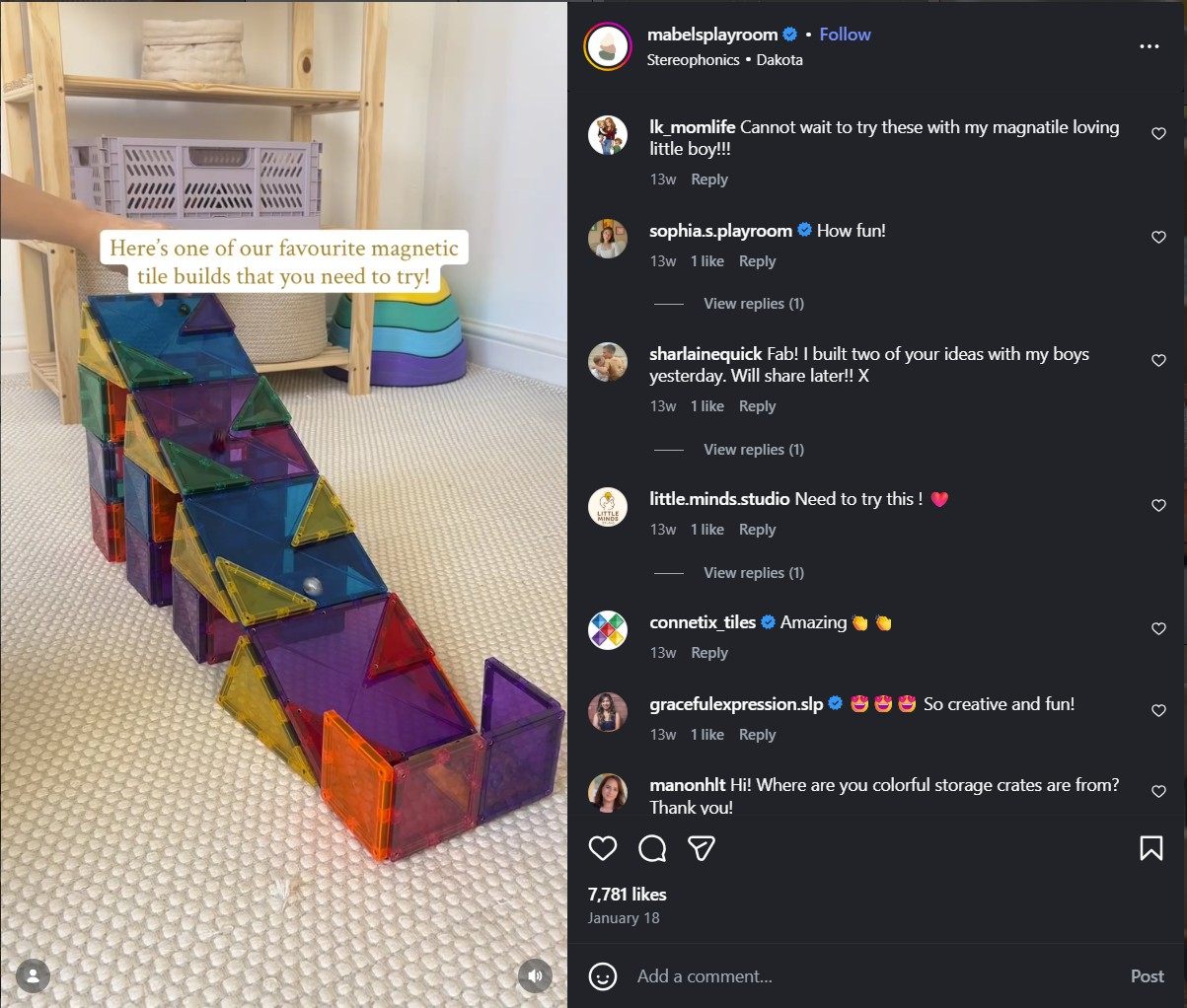
<p>Start simple. Take two tiles, connect them to form a ramp, and let your kid drop a marble from the top. Watch where it goes.</p>

<p>Then let them build from there.</p>

<p>The beauty of magnetic tiles is how forgiving they are. You can tilt them, adjust the angle, add more tiles to make the track longer. If it doesn’t work, you just try again. Trial and error is built right into the process.</p>

<p>Kids naturally start experimenting. “What if I make it steeper?” “What happens if I add a turn?” They don’t realize they’re learning about gravity, slope, and cause and effect. They just know it’s fun to watch the marble roll.</p>

<h2 id="the-hole-tile-trick">The Hole Tile Trick</h2>

<p>Here’s the part that kept my youngest engaged for that full forty-five minutes.</p>

<p>Add a tile with holes in it at the bottom of your run. The marble has to land perfectly to go through. Getting it to drop through feels like hitting a bullseye.</p>

<p>This is where the real problem-solving kicks in. Kids start adjusting the angle, the speed, the height. They iterate. They experiment. They get frustrated and then figure it out.</p>

<p>That struggle, followed by success, is exactly what STEM play is supposed to feel like.</p>

<p><img src="https://cdn.emzeth.com/ib/magnetic-tile-marble-run-instagram.jpg" alt="magnetic-tile-marble-run-instagram.jpg" />
<em>The hole tile adds the perfect challenge</em></p>

<h2 id="what-kids-actually-learn">What Kids Actually Learn</h2>

<p>While they’re building and experimenting, here’s what’s happening:</p>

<ul>
  <li><strong>Gravity</strong> — they see it work, every single run</li>
  <li><strong>Cause and effect</strong> — tilt the ramp, the marble goes faster</li>
  <li><strong>Problem-solving</strong> — why didn’t the marble go where I wanted?</li>
  <li><strong>Fine motor skills</strong> — connecting tiles, placing marbles, adjusting angles</li>
  <li><strong>Persistence</strong> — trying again when it doesn’t work</li>
</ul>

<p>All of it happens through play. No worksheets, no flashcards, no me standing over them explaining anything.</p>

<h2 id="video-demo">Video Demo</h2>

<video width="100%" controls="" style="border-radius: 8px; margin-top: 20px; margin-bottom: 20px;">
  <source src="https://cdn.emzeth.com/ib/magnetic-tile-marble-run.mp4" type="video/mp4" />
  Your browser does not support the video tag.
</video>

<h2 id="what-parents-are-saying">What Parents Are Saying</h2>

<blockquote>
  <p><em>“Was literally trying to build something like this yesterday and gave up! 😂 thanks!! X”</em></p>

  <p>— <strong>@inspired_byclaire</strong> · Instagram</p>
</blockquote>

<blockquote>
  <p><em>“We’ve tried to do this but we don’t have those larger tiles to make the actual ramp. Where did you get yours from? Thanks ❤️”</em></p>

  <p>— <strong>@hannahkyriakoudesign</strong> · Instagram</p>
</blockquote>

<blockquote>
  <p><em>“Cannot wait to try these with my magnatile loving little boy!!!”</em></p>

  <p>— <strong>@lk_momlife</strong> · Instagram</p>
</blockquote>

<blockquote>
  <p><em>“Fab! I built two of your ideas with my boys yesterday. Will share later!! X”</em></p>

  <p>— <strong>@sharlainequick</strong> · Instagram</p>
</blockquote>

<blockquote>
  <p><em>“😍😍😍 So creative and fun!”</em></p>

  <p>— <strong>@gracefulexpression.slp</strong> · Instagram</p>
</blockquote>

<h2 id="who-this-is-for">Who This Is For</h2>

<p>This activity works best if you have kids who love building and experimenting. If your kid enjoys stacking, connecting, and figuring out how things work, they’ll probably love this. If they’re newer to magnetic tiles, start with simpler builds and let them discover.</p>

<p>It’s also great for siblings playing together. Older kids can help younger ones, and the challenge aspect keeps everyone engaged.</p>

<h2 id="the-bottom-line">The Bottom Line</h2>

<p>You already have the tiles. You probably have some marbles somewhere in the house. Put them together, step back, and let your kid figure out the rest.</p>

<p>Sometimes the best STEM activities are the ones that take zero prep and hold attention for almost an hour.</p>

<p><em>Sarah writes about playful learning and simple activities that actually work. This post reflects real experience testing activities with her kids.</em></p>]]></content><author><name>Ibuerte Editors</name></author><category term="activities" /><category term="magnetic tiles" /><category term="marble run" /><category term="STEM activities" /><category term="kids play" /><category term="gravity" /><category term="fine motor skills" /><category term="open-ended play" /><category term="toddler activities" /><category term="problem solving" /><summary type="html"><![CDATA[Turn magnetic tiles into an epic marble run and watch kids build, experiment, and learn through play.]]></summary><media:thumbnail xmlns:media="http://search.yahoo.com/mrss/" url="https://cdn.emzeth.com/ib/magnetic-tile-marble-run.jpg" /><media:content medium="image" url="https://cdn.emzeth.com/ib/magnetic-tile-marble-run.jpg" xmlns:media="http://search.yahoo.com/mrss/" /></entry></feed>